
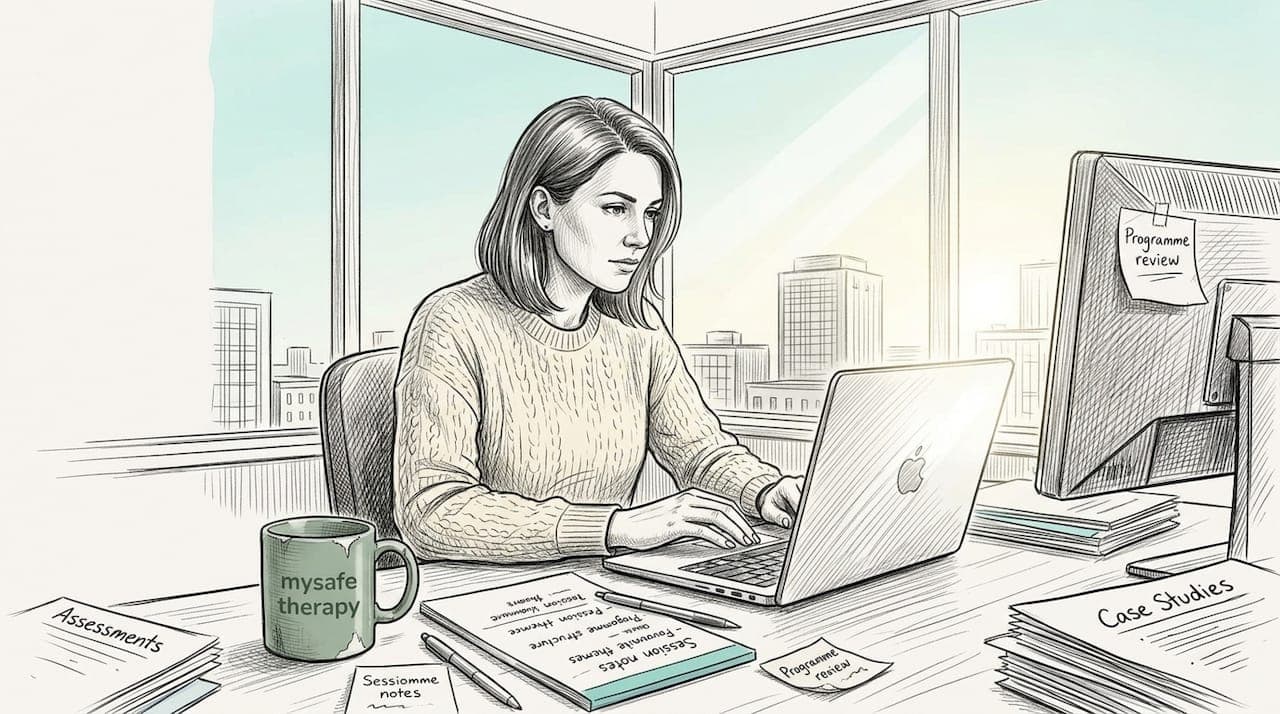
TL;DR:
- Nearly half of UK employees experience burnout symptoms, yet most only seek help when overwhelmed. Recognising early warning signs, setting boundaries, utilizing support networks, and engaging in self-care can prevent escalation effectively. Professional therapy is crucial when symptoms persist, ensuring sustainable recovery beyond individual efforts.
Nearly 49% of UK employees report experiencing burnout symptoms, yet most people only seek help once they have already reached a breaking point. Burnout is not simply feeling tired after a long week. It is a state of chronic physical and emotional exhaustion that develops when prolonged workplace stress goes unmanaged. The encouraging reality is that burnout is both preventable and treatable. This article sets out clear, evidence-based strategies drawn from UK research to help you recognise early warning signs, take practical preventive action, and understand when professional support is the right next step.
Table of Contents
- Recognising burnout: Early signs and critical triggers
- Set boundaries and prioritise tasks to reclaim control
- Harness support networks and workplace resources
- Self-care strategies: Mindfulness, movement, and rest
- Therapies and professional support: When and why to escalate
- Our perspective: Why sustainable burnout prevention takes more than self-care
- Get help to prevent burnout—with safe, flexible therapy options
- Frequently asked questions
Key Takeaways
| Point | Details |
|---|---|
| Spot signs early | Recognising burnout's early warnings enables fast, effective action to prevent escalation. |
| Set clear boundaries | Practical boundaries and saying no can reclaim control and reduce overwhelm. |
| Use support networks | Family, colleagues, and workplace resources greatly buffer stress and support recovery. |
| Prioritise professional help | Evidence-backed therapies such as CBT and art therapy can be game-changing for persistent burnout. |
Recognising burnout: Early signs and critical triggers
Catching burnout in its early stages is one of the most powerful things you can do. When symptoms go unrecognised, they compound. What begins as tiredness after a demanding project can develop into persistent exhaustion, emotional withdrawal, and eventually an inability to function at work or at home.
The most commonly reported signs of burnout include:
- Persistent fatigue that does not ease after rest or sleep
- Loss of motivation and a growing sense of detachment from work you once found meaningful
- Cynicism and irritability, particularly directed at colleagues or clients
- Reduced productivity despite spending longer hours working
- Physical symptoms such as frequent headaches, disrupted sleep, or recurrent illness
- Difficulty concentrating, making simple decisions feel overwhelming
- Emotional numbness, feeling disconnected from your job or personal relationships
The triggers behind these symptoms are equally important to understand. Excessive workloads are a primary driver, particularly in roles where there is a persistent gap between the demands placed on a person and the resources available to them. Lack of autonomy, unclear expectations from management, and a workplace culture that rewards overwork all contribute significantly. Poor work-life boundaries are another critical factor. When evenings and weekends are continuously invaded by emails and calls, recovery time disappears.
Early intervention prevents escalation of burnout into more serious conditions such as clinical depression or anxiety disorders. This makes awareness the first and most critical tool in your prevention kit.
Good mental health management tips can meaningfully reduce the risk of reaching that escalation point. Proactively prioritising mental health at work and at home is not optional—it is foundational to prevention.
Set boundaries and prioritise tasks to reclaim control
Once you have identified the warning signs and triggers, the next step is direct, structured action. One of the most evidence-backed approaches involves learning to set firm boundaries and manage your workload more deliberately. Research confirms that setting boundaries and prioritising tasks prevents overload and forms the cornerstone of sustainable burnout prevention.
Here is a practical step-by-step process you can begin this week:
- Audit your current workload. List every task you are responsible for across a typical week, including informal duties and requests. This creates visibility. You cannot prioritise what you cannot see.
- Categorise by urgency and importance. Use a simple two-by-two grid. Urgent and important tasks come first. Tasks that are neither urgent nor important should be dropped or delegated.
- Block non-work time on your calendar. Treat protected personal time the same way you treat a client meeting. Set a recurring calendar block for evenings, lunches, or weekends. In the UK, many employers now support this through flexible working policies introduced under the Employment Relations (Flexible Working) Act 2023.
- Communicate your boundaries clearly. If your manager sends messages at 10pm, a brief and professional response the following morning sets a clear precedent over time. Most colleagues respect boundaries that are communicated directly and consistently.
- Practice saying no constructively. Replace "I can't do that" with "I can take that on in two weeks" or "I'd need to deprioritise X to do that. Which would you prefer?" This frames limits in terms of workload management, not unwillingness.
- Delegate where possible. Identify tasks that do not require your specific skills and pass them on. Many people resist delegation due to a concern about quality, but controlled handovers with clear instructions are far more sustainable than doing everything yourself.
Pro Tip: Automate repetitive tasks using simple tools. Filters in your email client, scheduling tools for recurring reports, or shared templates for frequently asked questions can collectively return an hour or more of mental bandwidth each day. That freed capacity makes management tips for adults far easier to implement consistently.
Even small boundaries, applied consistently, produce meaningful change. You do not need to overhaul your entire working life in one week. Start with one boundary and build from there.
Harness support networks and workplace resources
Personal boundaries are essential, but nobody has to tackle burnout alone. Support is a proven buffer against chronic stress, and its absence is one of the most underappreciated contributors to burnout.
"Perceived workplace support" refers to the degree to which an employee feels their organisation values their contribution and cares about their wellbeing. Research confirms that improved perceived workplace support reduces emotional exhaustion, depersonalisation, and depression, particularly among healthcare and professional services workers. The mechanism is straightforward: when people feel supported, they are more willing to speak up about capacity issues before they become crises.
"Seeking support from family, friends, colleagues, or professionals buffers stress and reduces the isolation that so often accelerates burnout." — BMA guidance on burnout
The table below compares different sources of support and what each one offers:
| Source of support | What it provides | Best for |
|---|---|---|
| Family and close friends | Emotional validation, practical help | Day-to-day stress relief |
| Colleagues and peer groups | Shared understanding, normalisation | Workplace-specific pressures |
| Line manager or HR | Workload adjustment, formal accommodations | Structural workplace changes |
| Employee Assistance Programme (EAP) | Free, confidential counselling sessions | First-step professional support |
| Online therapy platforms | Flexible, ongoing professional therapy | Persistent or complex symptoms |
If you are unsure how to start a conversation about burnout at work, the following approaches can help:
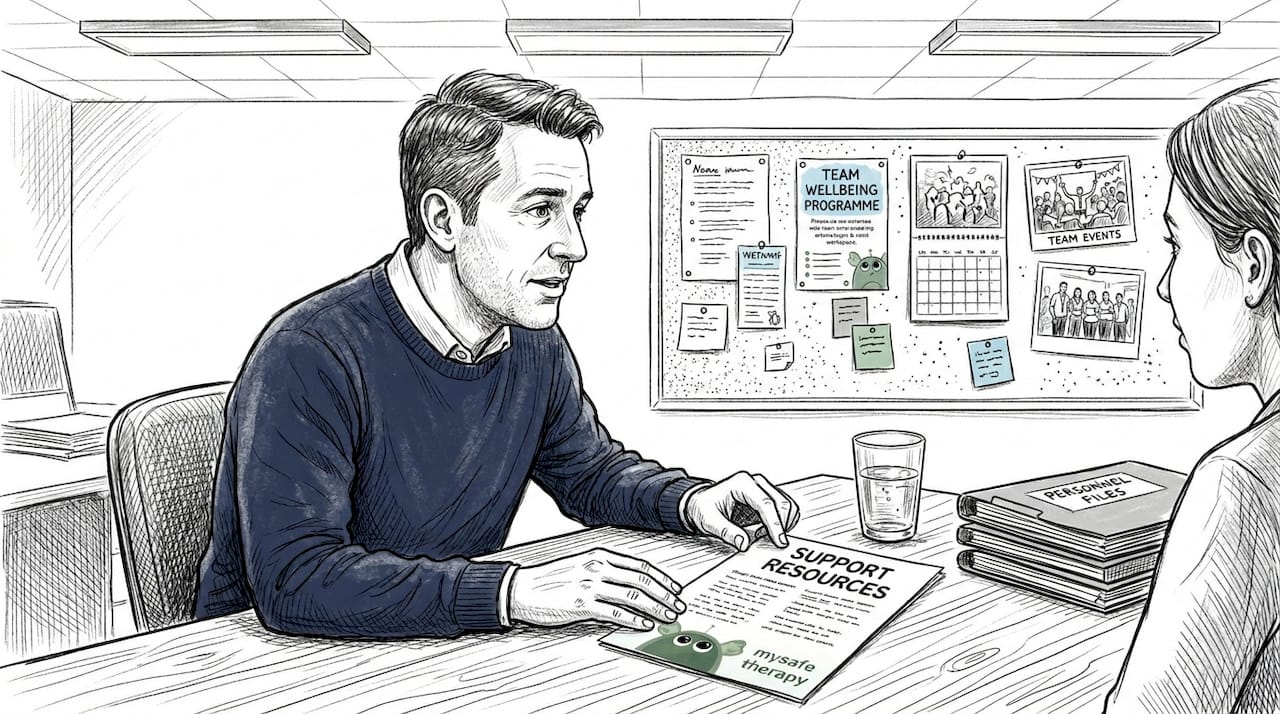
- Schedule a one-to-one with your line manager specifically to discuss workload, not to mention burnout by name initially
- Use factual, measurable language: "I am currently managing six concurrent projects and I am concerned about the quality of my output"
- Reference your company's wellbeing policy or EAP if one exists
- Consider speaking to a union representative if workplace culture is part of the problem
- Approach a trusted colleague first if formal conversations feel too daunting
Therapist guidance can help you navigate these conversations with more confidence. For those who want to explore independently first, a range of self-help therapy resources are available to supplement professional support.
Asking for help is not a sign of weakness. It is a practical, evidence-based step that measurably reduces burnout risk.
Self-care strategies: Mindfulness, movement, and rest
With a support network in place, the focus shifts to daily habits. Self-care is not a luxury. It is a form of maintenance that directly reduces your physiological stress response and builds resilience against future pressure.
NHS-endorsed evidence confirms that mindfulness and breathing exercises improve wellbeing and reduce burnout-related symptoms in working adults. Regular movement, quality sleep, and structured relaxation all produce measurable benefits. Here is how to build them into a realistic routine:
- Morning breathing exercise. Spend five minutes on slow, diaphragmatic breathing before checking your phone. Box breathing (four counts in, four hold, four out, four hold) activates your parasympathetic nervous system and reduces cortisol.
- Scheduled movement. You do not need a gym membership. A 20-minute walk during your lunch break has been shown to reduce fatigue and improve concentration. Many UK local councils fund subsidised yoga or pilates classes. Check your local authority's active living programme.
- Digital cutoff time. Set a firm time each evening after which you do not check work emails or messaging apps. Sixty to ninety minutes of screen-free time before sleep significantly improves sleep quality.
- Mindfulness practice. The NHS-approved app Headspace and Calm both offer structured beginner programmes. Even ten minutes of guided meditation three times a week produces measurable reductions in stress over four weeks.
- Group activities. Research published in BMJ Public Health found that group art therapy reduces emotional exhaustion significantly more than job modifications alone. Joining a local art class, choir, or running club combines social connection with structured rest.
Pro Tip: Schedule a two-minute daily self-check at the same time each day, perhaps just before you make your afternoon cup of tea. Ask yourself three questions: How is my energy level? Have I eaten and moved today? Is anything unresolved from work occupying my thinking? This simple habit creates self-awareness before symptoms intensify.
Effective therapy techniques can complement these habits, and a range of self-help tools for anxiety and low mood are available for those who want additional structure.
Self-care is not self-indulgence. It is an investment in your sustained capacity to work and live well.
Therapies and professional support: When and why to escalate
Self-care strategies and workplace adjustments will support the majority of people experiencing early or moderate burnout. However, there are clear situations in which professional support is not just beneficial but necessary.
The following circumstances indicate that professional help is the appropriate step:
- Symptoms have persisted for more than two to four weeks despite self-care efforts
- You are experiencing low mood, hopelessness, or thoughts of self-harm
- Burnout is affecting your personal relationships, physical health, or ability to perform basic tasks
- Anxiety or panic attacks have developed alongside exhaustion
- You have tried self-management strategies repeatedly without sustained improvement
The table below outlines the main professional therapy options relevant to burnout in the UK:
| Therapy type | Format | Evidence base | UK access route |
|---|---|---|---|
| Cognitive Behavioural Therapy (CBT) | Individual or group | Strong, including for burnout | NHS IAPT, private therapist |
| Digital CBT | App or online platform | Superior to job crafting in RCTs | Online platforms, MySafeTherapy |
| Group art therapy | Group in-person | Significant for emotional exhaustion | Community centres, NHS referral |
| Standard counselling | Individual | Established for stress and low mood | GP referral, private, EAP |
| Avatar-based therapy | Online | Emerging, accessible for stigma-conscious users | Specialist online platforms |
For anyone experiencing severe symptoms, professional referral via NHS 111 or your GP is appropriate and important. Both routes can assess your situation and direct you to the right level of care, whether that is self-referral to NHS Talking Therapies, a mental health assessment, or a private therapy recommendation.
Therapy for burnout does not require a crisis to be worthwhile. Accessing professional support early almost always leads to faster recovery and better long-term outcomes.
Our perspective: Why sustainable burnout prevention takes more than self-care
Most articles on burnout prevention, including parts of this one, focus heavily on individual actions. Set better boundaries. Meditate. Say no more often. These are genuinely useful tactics. But they place the full weight of prevention on the individual, and that framing is incomplete.
UK research consistently shows that organisational support and targeted therapies are empirically more significant predictors of burnout recovery than personal resilience strategies alone. In other words, a person practising daily mindfulness in a workplace with an excessive workload and no managerial support is working against a structural deficit with an individual tool. That is not a sustainable position.
The uncomfortable truth is that burnout is, in significant part, a systemic issue. UK employers have a responsibility to create conditions in which their staff can perform sustainably. This includes realistic workload expectations, genuine access to mental health support, and a management culture that does not reward overwork. Until those conditions exist, individual prevention strategies will only ever be partial solutions.
This does not mean personal strategies are without value. They are the immediate, accessible layer of prevention. But we think it is important for UK adults to understand that requesting institutional support is not overstepping. It is appropriate, necessary, and backed by the evidence. You are entitled to expect your employer to take your wellbeing seriously, not just provide a webinar once a year.
If flexible therapy sessions are what your situation requires, they are now far more accessible than most people realise. Progress on both fronts—personal habits and systemic advocacy—is the most durable path forward.
Get help to prevent burnout—with safe, flexible therapy options
Whether you are at the early stages of burnout or further along, professional therapy offers a structured and evidence-based route to recovery and resilience. You do not need to be in crisis to benefit from speaking to a qualified therapist.
At MySafeTherapy, UK-accredited therapists registered with BACP, UKCP, and NCPS are available for one-to-one video, chat, and avatar-based sessions, including evenings and weekends. Sessions are flexible, confidential, and affordable, with tools like AI journaling and mood tracking to support you between appointments. If you are ready to take the next step, you can start therapy at a time and pace that works for you. Sustainable burnout prevention is within reach.
Frequently asked questions
What are the very first signs of burnout I should notice?
Early warning signs include persistent tiredness, irritability, reduced motivation, and feeling overwhelmed. Acting on these early symptoms prevents escalation into more serious conditions.
Can I recover from burnout without leaving my job?
Yes, many people recover by adjusting workload and setting boundaries, accessing workplace support, or engaging with therapy—all without changing their employment.
Are digital therapy and apps really effective for burnout?
Yes. Digital CBT interventions have been shown in randomised controlled trials to outperform job crafting approaches for burnout, making them a credible and accessible option for UK adults.
When should I see a professional about burnout?
If your symptoms persist, affect daily functioning, or you feel unable to cope, contact NHS 111 or your GP promptly for a proper assessment and appropriate referral.