

TL;DR:
- The British Association for Counselling and Psychotherapy (BACP) is the UK's main body for accrediting and setting ethical standards for therapists. BACP membership is voluntary and distinguishes therapists with basic qualifications, while accreditation indicates higher proficiency and experience. Clients benefit from BACP standards through safer practice, clear complaint processes, and verified therapist competence.
The British Association for Counselling and Psychotherapy (BACP) is defined as the UK's primary professional membership body for counsellors and psychotherapists. Understanding the role of BACP in therapy matters because it directly shapes the standards your therapist must meet, the ethical protections you receive, and the recourse available if something goes wrong. BACP does not deliver training or award qualifications. Its function is to accredit practitioners, set ethical standards, and protect the public through a voluntary self-regulatory system that covers tens of thousands of therapists across the UK.
How does BACP accreditation and membership work?
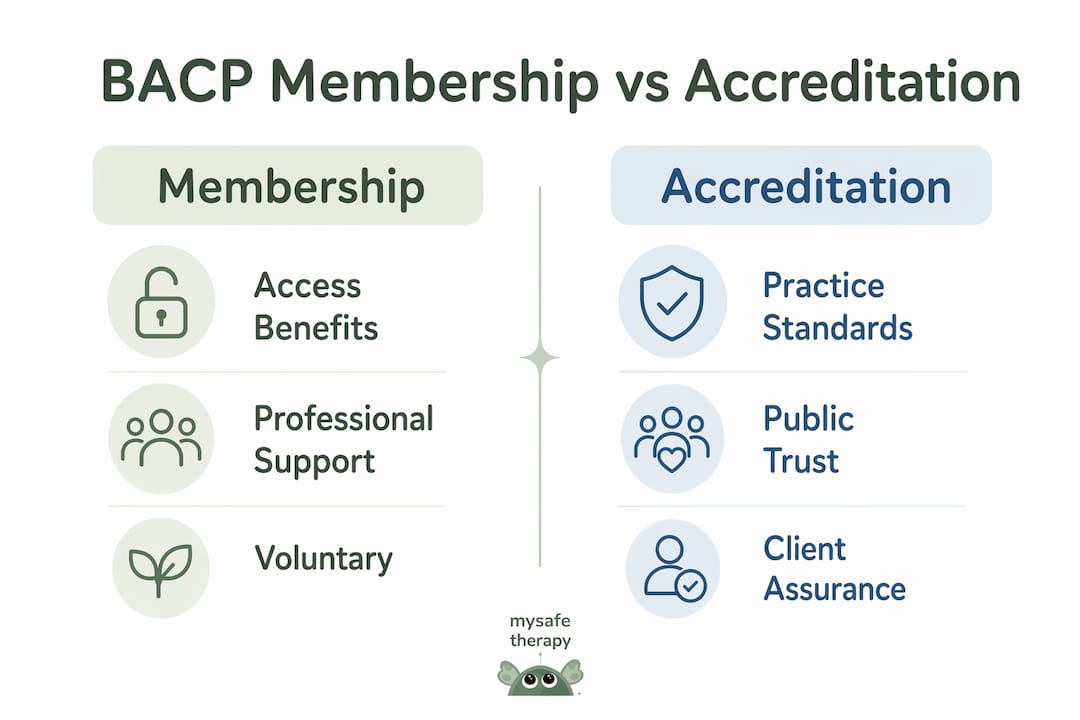
BACP membership and BACP accreditation are two distinct statuses, and the difference matters when you are choosing a therapist. Membership requires a therapist to provide evidence of their training and to agree formally to the BACP ethical framework. Accreditation goes further: it recognises therapists who have demonstrated high standards of training, supervised practice, and professional competence over time.

Therapists typically obtain their qualifications from a separate training body before applying to BACP. Bodies such as CPCAB award the actual counselling qualifications. BACP accredits some training courses that meet its curriculum standards, but it does not deliver training itself. This means a therapist's qualification and their professional membership are separate achievements, each carrying its own weight.
BACP membership statuses include Student Member, Member, and Accredited Member. Accredited Member status signals the highest level of verified competence within the BACP system. For clients, this distinction provides a clear signal about a therapist's experience and commitment to professional development.
Key requirements for BACP membership include:
- Evidence of a recognised counselling or psychotherapy qualification
- Agreement to abide by the BACP ethical framework
- Commitment to ongoing supervision and continuing professional development
- Adherence to BACP's professional conduct standards
Pro Tip: When searching for a therapist, look specifically for "BACP Accredited Member" status rather than standard membership alone. Accredited status confirms a higher threshold of verified training and practice hours.
Understanding therapist professional registration helps you ask the right questions before booking a first session.
What does the BACP ethical framework require of therapists?
The BACP ethical framework is the central document governing how member therapists must conduct themselves. The framework outlines responsibilities including confidentiality, respect for client autonomy, professional competence, and the maintenance of appropriate boundaries. These are not aspirational guidelines. They are binding standards that BACP members agree to uphold as a condition of membership.
The framework addresses several core areas of practice:
- Confidentiality: Therapists must protect client information, with clearly defined exceptions such as risk of serious harm.
- Respect: Practitioners must treat every client with dignity, regardless of background or presenting issue.
- Client autonomy: Therapists must support clients in making their own informed decisions about their care.
- Professional competence: Members must practise only within the limits of their training and experience.
- Ongoing supervision: Regular supervision is required to maintain the quality and safety of practice.
These standards connect directly to UK therapy best practices and align with guidance from the National Institute for Health and Care Excellence (NICE). NICE recommends specific evidence-based therapies for conditions such as depression and anxiety, and BACP-registered therapists are expected to practise within these evidence-informed boundaries.
"The ethical framework does not simply tell therapists what not to do. It defines what good practice looks like, giving clients a clear basis for the trust they place in their practitioner. When a therapist holds BACP membership, that framework is the foundation of the professional relationship."
Ethical dilemmas arise in practice. A therapist may face a situation where a client discloses information suggesting risk to themselves or others. The BACP framework provides guidance on how to handle such moments, balancing confidentiality against the duty to protect. This structured approach to difficult situations is one of the most significant protections the framework offers clients.
What happens when a client has a complaint about their therapist?
BACP operates a formal process for handling concerns about member therapists. The first point of contact for most clients is the Get help with counselling concerns service. This service guides clients through their options before they commit to a formal complaint, helping them understand whether their concern falls within BACP's scope and what steps to take next.
If a formal complaint is appropriate, the process follows these stages:
- Submit a complaint: The client submits a written complaint to BACP, outlining the concern and providing supporting evidence.
- Initial review: BACP assesses whether the complaint falls within the scope of the Professional Conduct Procedure (PCP).
- Investigation: If accepted, the complaint is investigated. The therapist is given the opportunity to respond.
- Hearing: Serious cases proceed to a formal hearing before a conduct panel.
- Outcome: The panel can impose sanctions ranging from a formal warning to removal from the BACP register.
The Professional Conduct Procedure prioritises public protection. It targets situations involving risk of harm or serious ethical breaches. Possible outcomes include suspension, conditions on practice, and removal from the register.
One critical limitation applies here. BACP membership is voluntary, and therapy is not legally regulated in the UK. Removal from the BACP register is a serious professional consequence, but it does not legally prevent a person from continuing to practise counselling under a different title. This is why verifying a therapist's registration before starting therapy carries real weight.
Pro Tip: Before raising a formal complaint, use BACP's Get help with counselling concerns service. Many concerns can be resolved through guidance and direct conversation with the therapist, without the need for a formal procedure.
Clients who feel uncertain about how to address a concern can also find practical guidance on switching therapists if the therapeutic relationship has broken down.
How does BACP membership affect your experience as a therapy client?
Choosing a BACP-registered therapist produces measurable differences in the quality and consistency of care. After a first session with a BACP therapist, 74% of clients return for a second session. That figure reflects a high level of client satisfaction and suggests that the professional standards BACP enforces translate into positive experiences in the room.
The average session fee for a BACP therapist is £57. That positions BACP practitioners as accessible relative to some other professional bodies, while still reflecting a professional standard of service.
The practical benefits of working with a BACP-registered therapist include:
- Ethical accountability: Your therapist operates under a binding code of conduct.
- Continuing professional development: BACP requires members to keep their skills current through ongoing training and supervision.
- Complaint recourse: You have a formal route to raise concerns if something goes wrong.
- Verified training: Membership confirms that a therapist has met a recognised standard of qualification.
| Benefit | What it means for you |
|---|---|
| Ethical framework compliance | Your therapist follows defined standards on confidentiality and respect |
| Accredited member status | Confirms verified training hours and supervised practice |
| Complaint procedure access | Formal process available if serious concerns arise |
| Continuing development requirement | Your therapist's skills remain current throughout their career |
| Client return rate of 74% | Indicates consistent client satisfaction after a first session |
BACP also promotes client autonomy as a core value. This means your therapist is required to support your right to make informed decisions about your own care, including the right to end therapy or change practitioner without pressure. Understanding why UK-accredited therapists offer stronger protections helps clients make confident choices from the outset.
Key takeaways
BACP's role in UK therapy is to set binding ethical standards, accredit qualified practitioners, and provide a formal complaint process that protects the public from serious professional misconduct.
| Point | Details |
|---|---|
| BACP sets ethical standards | The ethical framework binds all members to confidentiality, respect, and professional competence. |
| Accreditation signals verified competence | Accredited Member status confirms training hours and supervised practice beyond basic membership. |
| Complaint procedures exist but have limits | BACP can remove a therapist from its register but cannot legally ban them from practising. |
| Client return rates reflect quality | 74% of clients return after a first session with a BACP therapist, indicating consistent satisfaction. |
| Membership is voluntary, not statutory | Therapy is not legally regulated in the UK, making BACP registration a key public protection signal. |
BACP standards matter more than most clients realise
At Mysafetherapy, we see a consistent pattern: clients arrive having chosen a therapist based on availability or price, without checking professional registration. That choice carries real risk in a sector where anyone can legally call themselves a counsellor.
The voluntary nature of BACP membership is the detail that surprises people most. Because therapy is not legally regulated in the UK, BACP's self-regulatory system is the primary mechanism protecting the public. Removal from the register is a serious consequence, but it is not a legal bar on practice. This makes the initial verification step, checking that a therapist holds current BACP membership or accreditation, more important than it might appear.
The ethical framework is also frequently misunderstood as a list of prohibitions. It is, in practice, a positive definition of what good therapy looks like. Clients who understand the framework are better placed to recognise when their therapist is meeting the standard and when something feels wrong.
The evolving professional standards in UK therapy point toward greater transparency and public accountability. BACP's ongoing development of its ethical guidance reflects this direction. Clients who engage with these standards, rather than treating them as background detail, are more likely to get the most from their therapy and to act confidently if concerns arise.
— Mysafetherapy
Therapy with BACP-accredited professionals at Mysafetherapy
Mysafetherapy connects clients across the UK with therapists registered with professional bodies including BACP, UKCP, and NCPS. Every therapist on the platform holds verified professional credentials, so you can book with confidence that the ethical standards described in this article apply to your sessions.
Sessions are available via video, online chat counselling, and avatar-based therapy from £49, with evening and weekend availability. The platform supports clients dealing with anxiety, depression, trauma, burnout, and relationship difficulties. Pricing is transparent, therapist switching is straightforward, and all sessions are confidential. If you are ready to find a therapist who meets BACP's professional standards, start your therapy with Mysafetherapy today.
FAQ
What is BACP and what does it do?
BACP is the British Association for Counselling and Psychotherapy, the UK's primary professional membership body for counsellors and psychotherapists. It sets ethical standards, accredits practitioners, and manages complaints against member therapists.
Is BACP membership legally required for therapists in the UK?
BACP membership is voluntary, not a legal requirement. Therapy is not legally regulated in the UK, which means anyone can practise counselling without BACP registration, making it an important but non-statutory protection for clients.
What does the BACP ethical framework cover?
The BACP ethical framework covers confidentiality, respect for client autonomy, professional competence, appropriate boundaries, and the requirement for ongoing supervision. All BACP members agree to these standards as a condition of membership.
How do I make a complaint about a BACP therapist?
Start with BACP's Get help with counselling concerns service, which guides you through your options before a formal complaint. Serious concerns can be submitted through the Professional Conduct Procedure, which can result in removal from the BACP register.
What is the difference between BACP membership and BACP accreditation?
BACP membership confirms a therapist has met basic training and ethical requirements. BACP Accredited Member status confirms a higher threshold of verified training hours, supervised practice, and demonstrated professional competence.