

TL;DR:
- Adolescent therapy is tailored to address the emotional and developmental challenges of teenagers aged 10 to 19, emphasizing skill-building and identity formation. Different modalities like CBT, DBT, and family therapy are adapted for this age group, with early intervention leading to better long-term outcomes. Parental support involves respecting confidentiality and facilitating access, which enhances engagement and effectiveness.
Adolescent therapy is defined as a specialised form of mental health treatment designed specifically for young people aged 10 to 19, addressing the emotional, behavioural, and developmental challenges unique to this life stage. Unlike adult therapy, it accounts for rapid neurobiological changes in the teenage brain, including impulse control development and identity formation, which fundamentally alter how therapeutic work must be structured. The formal term used by clinicians is adolescent psychotherapy or teen counselling, though "adolescent therapy" is the widely accepted shorthand. Approximately 1 in 7 young people aged 10 to 19 have experienced at least one mental health condition, which means the need for age-appropriate support is substantial and growing. Modalities such as cognitive behavioural therapy (CBT), dialectical behaviour therapy (DBT), and group therapy are all adapted specifically for teenage clients, with distinct session structures, language, and goals that differ markedly from adult equivalents.
What is adolescent therapy and how does it differ from adult therapy?
Adolescent therapy is a therapeutic process that treats the psychological and emotional needs of teenagers within a framework that reflects their developmental stage. The distinction from adult therapy is not merely cosmetic. Between the ages of 12 and 18, the brain undergoes significant changes in areas governing emotion regulation, risk assessment, and social cognition, which means a therapist cannot simply apply adult models to a younger client and expect the same results.
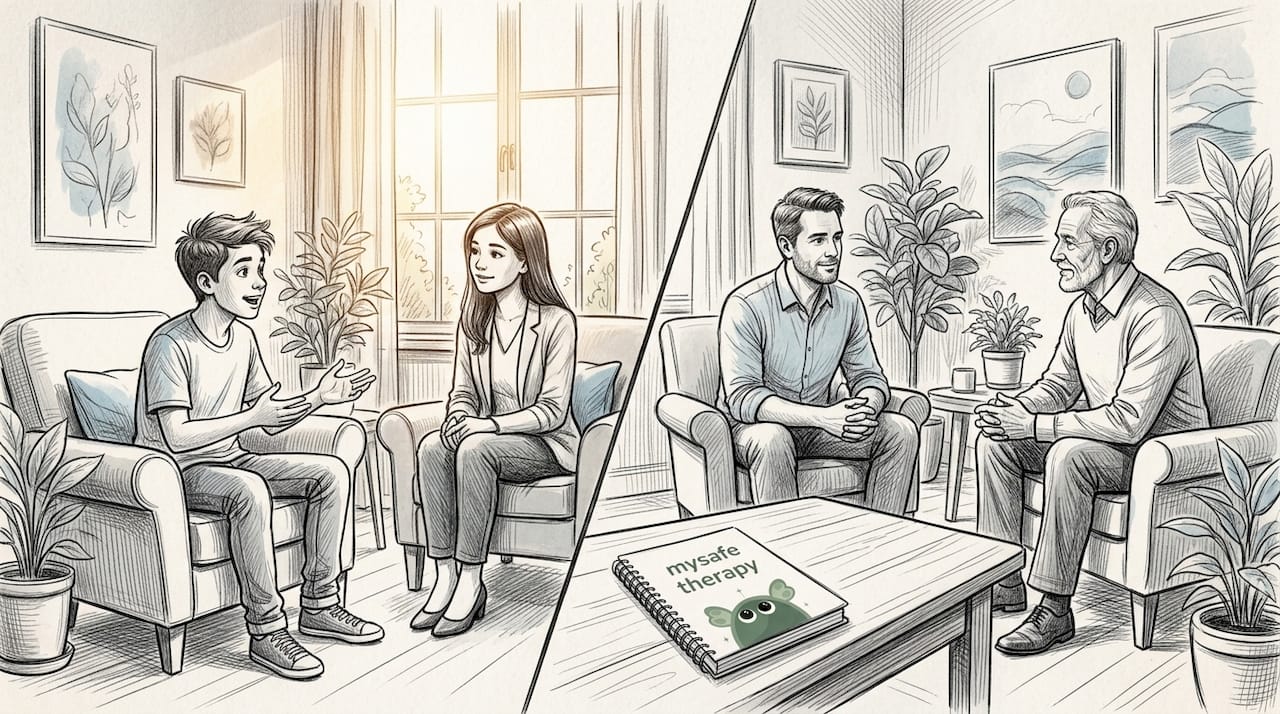
A teenager presenting with anxiety, for instance, experiences and expresses that anxiety differently from an adult. Peer relationships, academic pressure, digital stress, and family dynamics all intersect in ways that require a therapist with specific adolescent training to navigate competently. Therapists working with teens must verify their adolescent-specific training to address issues such as peer pressure, digital stress, and school challenges effectively.
The goals of adolescent mental health therapy also differ. Where adult therapy often focuses on processing past experiences, teen counselling prioritises building present-day coping skills, strengthening identity, and improving communication within the family unit. This future-oriented, skill-building emphasis is central to what makes adolescent therapy effective.
What types of adolescent therapy are commonly used?
Several therapeutic modalities are used with teenagers, each suited to different presentations and needs. Understanding the options helps you make an informed decision when seeking support for your child.
| Therapy type | Primary focus | Typical duration |
|---|---|---|
| Cognitive behavioural therapy (CBT) | Thought patterns and behaviour change | 12 to 20 sessions |
| Dialectical behaviour therapy (DBT) | Emotion regulation and distress tolerance | 19 to 24 weeks |
| Family-based therapy | Family communication and relational dynamics | 15 to 20 sessions |
| Mindfulness-based therapy | Present-moment awareness and stress reduction | 8 to 12 sessions |
| Group therapy | Peer support and social skill development | 8 to 16 weeks |
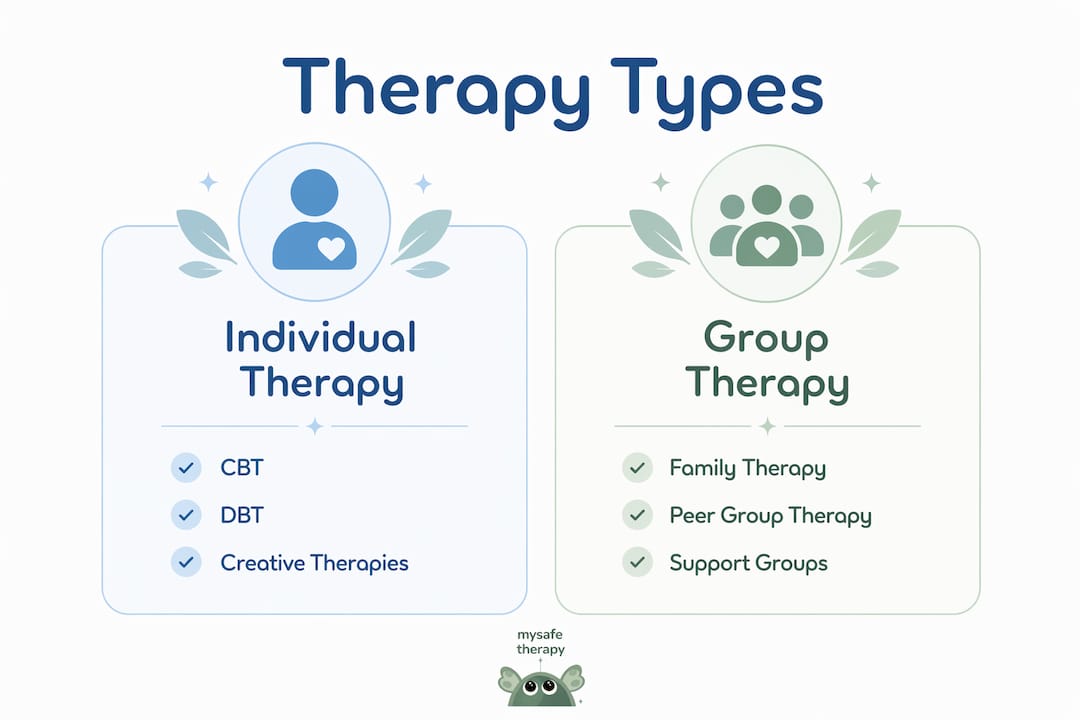
These therapy durations reflect standard programme lengths, though individual cases vary based on severity and progress.
Cognitive behavioural therapy (CBT)
CBT is the most widely researched approach for adolescent anxiety and depression. It works by helping teenagers identify distorted thinking patterns and replace them with more accurate, balanced perspectives. 60 to 80% of adolescents treated with CBT show meaningful clinical improvement, making it the benchmark against which other modalities are often measured.
Dialectical behaviour therapy (DBT)
DBT was originally developed for adults with borderline personality disorder but has been extensively adapted for teenagers, particularly those who self-harm or experience intense emotional dysregulation. It combines individual therapy with skills training in mindfulness, distress tolerance, and interpersonal effectiveness. The structured skills component is what distinguishes DBT from standard talk therapy.
Family therapy and group therapy
Family therapy treats the relational system around the teenager rather than the individual alone, which is particularly effective when communication breakdown or parental conflict is contributing to the teen's difficulties. Group therapy offers a different mechanism: 73% of adolescent participants in group therapy showed improved outcomes compared to untreated peers, across 56 reviewed studies. This improvement is attributed to peer normalisation, shared problem-solving, and the development of social skills in a structured setting.
Creative and expressive therapies, including art therapy and drama therapy, are also used with teenagers who struggle to articulate their experiences verbally. These approaches use non-verbal expression as a route into emotional processing and are often combined with more structured modalities.
Pro Tip: When exploring therapy types, ask the therapist directly which modality they intend to use and why it suits your child's specific presentation. A competent adolescent therapist will explain their rationale clearly.
What are the benefits of adolescent therapy?
The benefits of adolescent therapy extend well beyond symptom reduction. Effective treatment produces measurable changes across emotional, behavioural, and relational domains.
- Improved emotion regulation: Teenagers learn to identify, name, and manage difficult emotions rather than acting on them impulsively or suppressing them entirely.
- Reduced anxiety and depression: Evidence-based approaches such as CBT produce significant reductions in clinical anxiety and depressive symptoms in the majority of adolescent clients.
- Decreased self-harm and risky behaviour: DBT in particular has a strong evidence base for reducing self-harm, suicidal ideation, and impulsive risk-taking in teenagers.
- Stronger self-esteem and identity: Therapy provides a space for teenagers to explore who they are without judgement, which supports healthy identity development during a period of significant change.
- Better family communication: Family therapy and parental involvement in individual therapy both contribute to improved communication patterns at home.
- Long-term protective effects: Early intervention prevents long-term negative effects on education, relationships, and physical health. This means that addressing difficulties at 14 can materially alter outcomes at 24.
The long-term evidence is particularly significant for parents who are uncertain whether therapy is necessary. Waiting until a teenager's difficulties become severe consistently produces worse outcomes than seeking support early.
How does adolescent therapy work in practice?
Understanding the process removes uncertainty and helps you prepare your teenager for what to expect.
- Initial assessment: The therapist conducts a structured assessment covering the teenager's history, current difficulties, family context, and goals. This assessment informs a customised treatment plan rather than a generic programme.
- Establishing a confidential space: A confidential, nonjudgmental environment is established from the outset. Teenagers are informed of what information remains private and under what circumstances confidentiality would need to be broken, such as immediate risk of harm.
- Regular sessions: Sessions typically occur weekly and last 50 minutes. The frequency may increase during periods of acute difficulty or reduce as the teenager stabilises.
- Parental involvement: The degree of parental involvement varies by modality and age. Family therapy includes parents directly. Individual therapy may involve periodic parent consultations to share progress without breaching the teenager's confidentiality.
- Coordination with schools and healthcare providers: Coordinating therapy with schools, paediatricians, or psychiatrists increases effectiveness by addressing the teenager's full daily context. A therapist working in isolation from a teenager's school environment misses a significant portion of the picture.
- Review and adjustment: Treatment plans are reviewed regularly. If a particular approach is not producing results, a competent therapist will adapt the method or refer to a more appropriate specialist.
Where complex conditions require both therapy and medication, therapists such as LCSWs, LMFTs, and LPCs work alongside psychiatrists who manage diagnosis and prescribing. This combination is standard practice for conditions such as severe depression or ADHD.
Virtual therapy platforms provide access to evidence-based adolescent therapies for families facing geographical or logistical barriers, and the evidence base for online delivery is now well established. You can explore evidence-based therapy methods to understand which approaches are supported by clinical research.
Pro Tip: Ask any prospective therapist specifically about their experience working with teenagers. General counselling qualifications do not automatically confer adolescent-specific competence.
How can parents support their teenager through therapy?
Your role as a parent or guardian is significant, but it requires a particular kind of restraint alongside active support.
- Choose a qualified adolescent therapist: Verify that the therapist holds registration with a recognised professional body such as BACP, UKCP, or NCPS, and has demonstrable experience with teenage clients.
- Respect your teenager's privacy: Therapy works because teenagers can speak freely. Pressuring your child to disclose session content undermines the therapeutic confidentiality that makes progress possible.
- Communicate without pressure: Let your teenager know you support their attendance without making therapy a source of additional stress. Avoid framing it as a consequence or a last resort.
- Prioritise therapist fit: The therapeutic alliance between teenager and therapist is often more influential for success than the specific technique used. If your teenager consistently reports feeling unheard or uncomfortable, take that seriously and consider switching therapists.
- Coordinate with school: Share relevant information with school pastoral staff where appropriate, and ask whether the therapist is willing to liaise with educational professionals.
- Act early: Stigma around seeking help remains a barrier for many families. Early intervention consistently produces better outcomes than waiting for a crisis.
Pro Tip: If your teenager is resistant to therapy, consider starting with a single exploratory session framed as a conversation rather than a commitment. Reducing the perceived stakes often reduces resistance.
Key takeaways
Adolescent therapy is most effective when it is developmentally informed, delivered by a qualified specialist, and supported by a parent who respects the process without overriding it.
| Point | Details |
|---|---|
| Distinct from adult therapy | Teen counselling addresses neurobiological and developmental factors specific to ages 12 to 18. |
| Multiple modalities available | CBT, DBT, family therapy, and group therapy each serve different needs and have different durations. |
| Early intervention matters | Seeking support before difficulties become severe produces significantly better long-term outcomes. |
| Therapist fit is critical | The trust between teenager and therapist predicts engagement more reliably than the therapy method alone. |
| Parental role requires restraint | Supporting therapy means respecting confidentiality and avoiding pressure, not monitoring session content. |
Adolescent therapy: what we have observed at Mysafetherapy
The most consistent finding across the teenagers we see is that the modality matters far less than the match. A teenager who trusts their therapist will engage with almost any evidence-based approach. A teenager who feels judged or misunderstood will disengage regardless of how technically sound the treatment plan is. This is not a soft observation. It is the single most reliable predictor of whether therapy produces lasting change.
We also notice that parents frequently underestimate their own influence on the process. A teenager whose parent frames therapy as a punishment, or who interrogates them after every session, is far less likely to engage openly. The most effective parents we work with treat therapy as their teenager's space, offer logistical support, and ask only whether the sessions feel useful.
The shift towards online delivery has genuinely expanded access. Teenagers who would not attend a clinic will often engage with a therapist via video or even avatar-based sessions, where the reduced social exposure lowers the barrier to disclosure. Format flexibility is not a compromise. For many teenagers, it is the difference between engaging and not engaging at all.
Therapy is not a signal that something has gone irreparably wrong. It is a structured, evidence-based process that gives teenagers tools they will use for the rest of their lives.
— Mysafetherapy
Start your teenager's therapy journey with Mysafetherapy
Mysafetherapy connects families across the UK with accredited therapists registered with BACP, UKCP, and NCPS, all of whom meet verified professional standards. Sessions are available via video, chat, and avatar formats, with evening and weekend appointments to fit around school and work schedules.
If you are ready to find the right support for your teenager, you can start therapy online through Mysafetherapy today. Therapist profiles, qualifications, and specialisms are all visible before you book, so you can make an informed choice. You can also review therapist standards to understand the accreditation requirements every Mysafetherapy practitioner must meet. Early support produces better outcomes. The right time to act is before a crisis, not after.
FAQ
What does adolescent therapy involve?
Adolescent therapy involves regular sessions with a trained therapist who uses evidence-based techniques such as CBT or DBT to address a teenager's emotional, behavioural, or developmental difficulties. Sessions are confidential, structured around the teenager's specific needs, and typically occur weekly.
How long does adolescent therapy last?
Duration depends on the modality and the severity of the presenting difficulties. CBT typically runs for 12 to 20 sessions, DBT for 19 to 24 weeks, and group therapy programmes for 8 to 16 weeks.
Should parents attend adolescent therapy sessions?
Parental involvement varies by approach. Family therapy includes parents directly, while individual therapy may involve periodic consultations. Teenagers generally need their own confidential space for therapy to be effective.
How do I know if my teenager needs therapy?
Persistent changes in mood, withdrawal from relationships, declining school performance, self-harm, or significant behavioural shifts are all indicators that professional support may be appropriate. Early intervention produces better outcomes than waiting for difficulties to escalate.
Is online therapy effective for teenagers?
Virtual therapy platforms provide access to effective, evidence-based adolescent therapies and are particularly useful for families facing geographical or logistical barriers. The evidence base for online delivery is well established and outcomes are comparable to in-person treatment.