

TL;DR:
- Teletherapy is a secure, digital method of delivering mental health services via video, phone, or messaging, now widely accepted as effective for mild to moderate conditions. It offers benefits such as increased accessibility, flexible scheduling, and reduced anxiety, making therapy more convenient for many clients. However, severe psychiatric cases or emergencies still require in-person or specialized care, emphasizing the importance of choosing the appropriate treatment format.
Teletherapy is defined as the delivery of mental health services remotely through secure, internet-based technologies, including video conferencing, telephone calls, and encrypted messaging. Also referred to as online therapy or e-counselling, it is the digital equivalent of sitting in a therapist's consulting room. Platforms such as Mysafetherapy connect UK adults with BACP, UKCP, and NCPS-registered therapists through formats that include live video, text chat, and avatar-based sessions. Online therapy is no longer a niche alternative. It is an established, evidence-backed model of care that millions of people now choose as their primary route to mental health support.
What is teletherapy and how does it work in practice?
Teletherapy is delivered through secure digital platforms that support real-time video sessions, telephone calls, and asynchronous messaging. The format you choose depends on your preferences, your therapist's approach, and the nature of the issues you want to address. All three formats share the same clinical goals as face-to-face therapy.
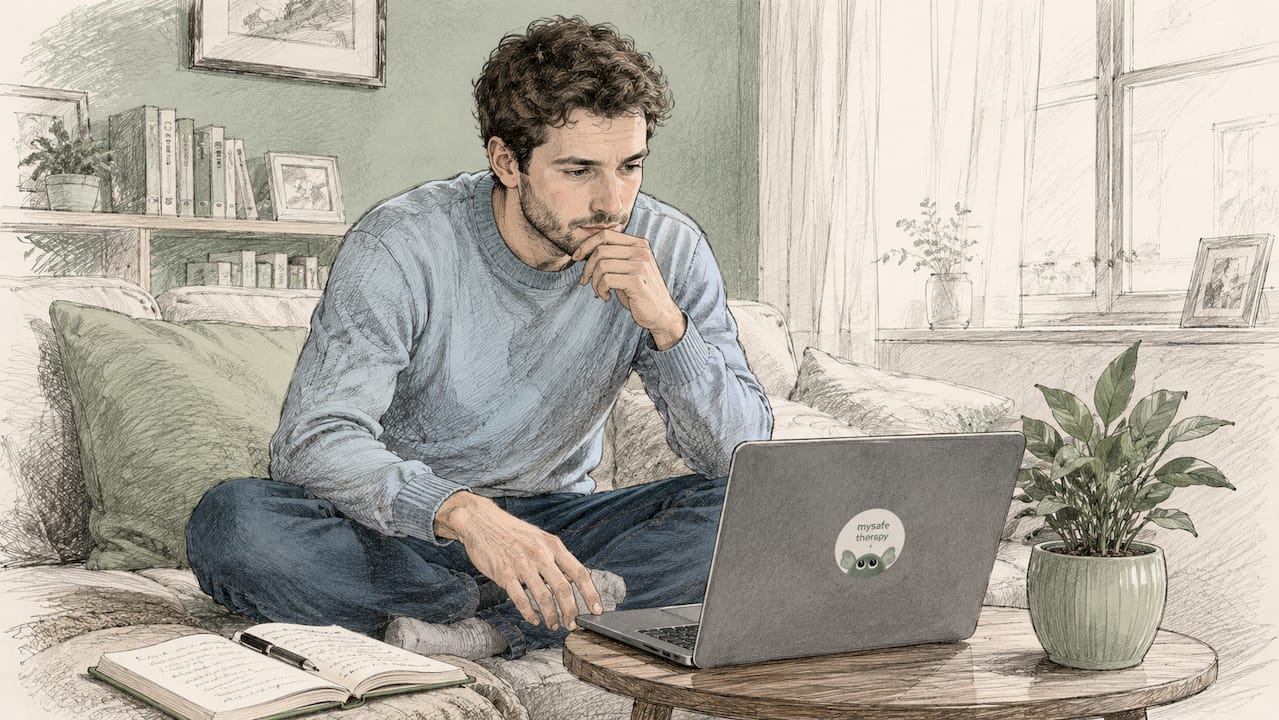
The booking process typically begins on a platform's website. You complete an intake form covering your current concerns, relevant history, and preferred session times. The platform then matches you with a suitable therapist, or you select one directly from a listed directory.
Sessions last 45–60 minutes and follow the same structured approach as in-person appointments. Your therapist will open with a check-in, work through the agreed therapeutic focus, and close with a summary or homework task. The rhythm is familiar, even if the setting is your living room.
Technical requirements are straightforward:
- A stable broadband or mobile data connection
- A device with a camera and microphone (laptop, tablet, or smartphone)
- A private, quiet space where you will not be overheard
- Headphones to protect confidentiality on both ends
- A secure, up-to-date browser or the platform's dedicated app
All reputable UK platforms use end-to-end encryption for video and messaging. Mysafetherapy, for example, applies encryption across all session formats and stores no session recordings without explicit consent.
Pro Tip: Test your camera, microphone, and internet connection at least ten minutes before your first session. A brief technical check removes unnecessary stress and lets you focus entirely on the conversation.
Teletherapy vs in-person therapy: what are the real benefits?
Research confirms that for mild to moderate conditions such as anxiety and depression, teletherapy produces outcomes comparable to traditional face-to-face care. That finding matters because it removes the assumption that remote therapy is a lesser option. For many people, it is simply a better fit.
The benefits break down across several practical dimensions:
- Accessibility. Adults in rural areas, those with mobility limitations, or those managing chronic illness can access therapy without travelling. Geography stops being a barrier.
- Scheduling flexibility. Evening and weekend slots are far more common on online platforms than in traditional NHS or private clinic settings. Mysafetherapy offers appointments seven days a week, including late evenings.
- Reduced anxiety before sessions. Clients report less "white coat" anxiety when attending from a familiar environment. Feeling physically safe in your own space can accelerate the process of opening up to a therapist.
- Cost savings. There is no travel cost, no parking fee, and no need to take time off work for a commute. For clients attending weekly sessions, this adds up considerably over a course of treatment.
- Consistency of attendance. Flexible access improves treatment adherence. Fewer missed sessions mean more consistent progress.
"Teletherapy often helps overcome initial barriers by allowing clients to engage from comfortable settings, reducing the anxieties that have historically kept people from seeking help at all."
The consistency point is underappreciated. Therapy works through repetition and accumulated trust. Anything that makes it easier to attend regularly directly improves outcomes. Teletherapy's scheduling model is structurally designed to support that.
Clinical goals and therapeutic rigour remain unchanged in teletherapy compared to in-person care. The modality changes; the standard of care does not.
When is traditional therapy preferable to teletherapy?
Teletherapy is not the right fit for every situation. Conditions such as schizophrenia and other severe psychiatric disorders typically require face-to-face, specialist care that a remote platform cannot replicate. Active substance misuse crises, acute suicidal ideation, and psychotic episodes all require in-person or emergency intervention.
The therapeutic alliance, which is the working relationship between client and therapist, also requires more deliberate effort in a virtual setting. Non-verbal cues are harder to read through a screen. A skilled teletherapist compensates by asking more direct questions, checking in more frequently, and using structured communication techniques. However, some clients find this adaptation less satisfying than physical presence.
| Situation | Recommended Format |
|---|---|
| Mild to moderate anxiety or depression | Teletherapy is well-suited |
| Relationship or communication issues | Teletherapy or in-person, depending on preference |
| Severe psychiatric conditions | In-person or specialist clinical care |
| Acute crisis or emergency | In-person or emergency services |
| Trauma processing (complex PTSD) | In-person often preferred; teletherapy can supplement |
Privacy is another practical consideration. Not everyone has a genuinely private space at home. Shared housing, thin walls, or family members nearby can compromise confidentiality. Clients need to prepare both their physical and technical environments before each session.
Pro Tip: If you live with others, inform them you have a private appointment before your session starts. A simple "do not disturb" signal on your door removes the risk of interruption at a sensitive moment.
Teletherapy is best understood as complementary to the broader mental health system, not as a standalone replacement for all forms of care. Knowing when to step up to in-person or emergency support is part of using it responsibly.
How to start teletherapy in the UK: practical steps
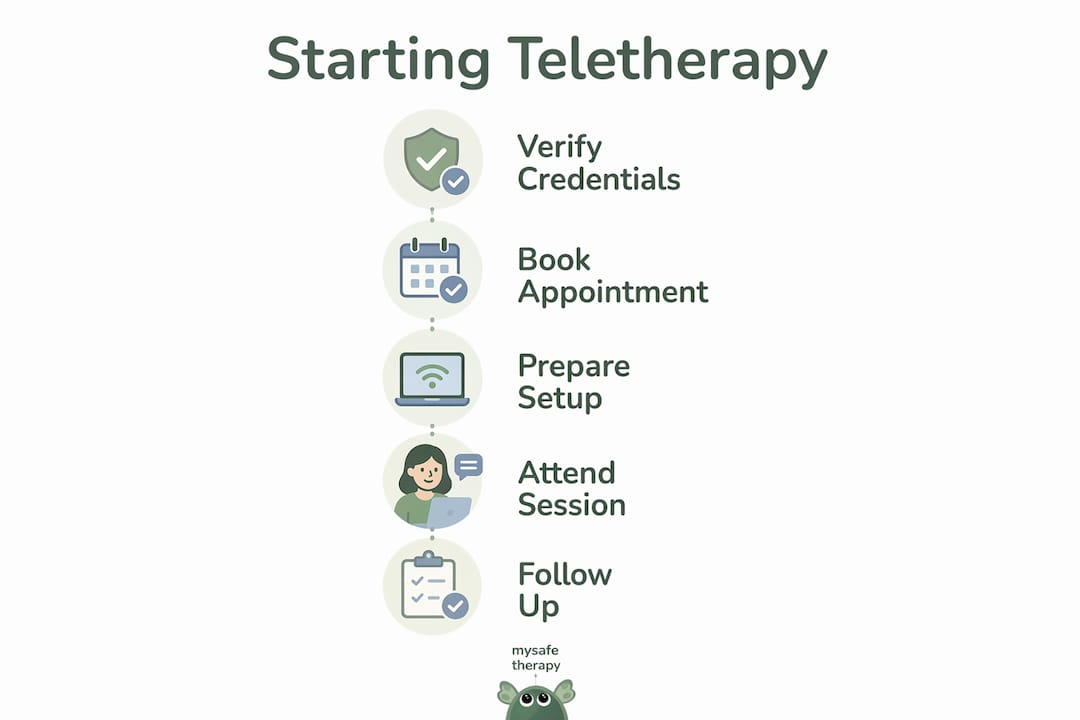
Starting teletherapy in the UK is straightforward when you know what to look for. The steps below apply whether you are using Mysafetherapy or any other regulated platform.
Step 1: Verify therapist credentials. Confirm that any therapist you consider is registered with a recognised UK body. BACP (British Association for Counselling and Psychotherapy), UKCP (United Kingdom Council for Psychotherapy), and NCPS (National Counselling and Psychotherapy Society) are the three primary accrediting organisations. Registration is verifiable on each body's public directory.
Step 2: Complete the intake process honestly. Intake forms ask about your current mental health, relevant history, and goals for therapy. Accurate answers lead to better therapist matching. Vague responses slow the process down.
Step 3: Prepare your environment. Before your first session:
- Choose a room where you will not be overheard
- Use headphones for audio privacy
- Close unnecessary browser tabs and silence notifications
- Have water nearby; sessions can be emotionally demanding
Step 4: Clarify costs and frequency upfront. UK teletherapy providers typically offer transparent per-session pricing. Check whether your private health insurance covers online therapy, as many UK insurers now include it. Mysafetherapy lists all pricing clearly before you commit to booking.
Step 5: Attend your first session without fixed expectations. The first appointment is largely an assessment. Your therapist will ask questions, clarify your goals, and explain their approach. It is normal for the first session to feel more like a structured conversation than therapy proper.
Selecting the right therapist matters as much as selecting the right platform. Therapist matching is one of the strongest predictors of positive outcomes in any format of therapy. If the first therapist is not the right fit, switching is not a failure. It is good clinical practice.
Key takeaways
Teletherapy delivers mental health care remotely through encrypted platforms and is clinically effective for mild to moderate conditions, provided clients choose accredited therapists and prepare their environment properly.
| Point | Details |
|---|---|
| Teletherapy definition | Mental health services delivered remotely via secure video, phone, or messaging platforms. |
| Effectiveness | Research confirms comparable outcomes to in-person therapy for anxiety and depression. |
| Key benefits | Flexibility, accessibility, reduced session anxiety, and improved treatment consistency. |
| Limitations | Not suitable for severe psychiatric conditions, acute crises, or clients without private space. |
| Starting in the UK | Verify BACP, UKCP, or NCPS registration before booking and prepare your environment in advance. |
Mysafetherapy's view on teletherapy in 2026
The conversation around teletherapy has shifted considerably since 2020. What was once treated as a temporary workaround is now the preferred format for a significant portion of therapy clients in the UK. That shift reflects something real about how people want to access care.
What we have observed at Mysafetherapy is that the clients who benefit most from online therapy are not necessarily those with the least severe needs. They are often people who previously avoided therapy entirely because the traditional model did not fit their lives. The commute, the waiting room, the fixed appointment slot during working hours: these were genuine barriers, not excuses. Teletherapy removed them.
The limitation we take most seriously is the therapeutic alliance question. Building trust through a screen requires more deliberate effort from both the therapist and the client. Therapists need to be explicit about things that would be communicated non-verbally in a room. Clients need to be willing to name what they are feeling rather than assuming it is visible. That adjustment is achievable, but it is not automatic.
Our honest position is this: teletherapy is not universally superior to in-person care. It is, however, the right choice for a much larger group of people than the traditional model ever reached. The goal is not to replace face-to-face therapy. The goal is to make effective mental health support available to anyone who needs it, in a format that actually works for their life.
— Mysafetherapy
Start teletherapy with Mysafetherapy
Mysafetherapy connects UK adults with BACP, UKCP, and NCPS-registered therapists through a platform built for privacy, flexibility, and genuine clinical quality. Whether you prefer live video sessions, text-based chat therapy, or the anonymity of avatar-based sessions, the platform offers formats designed around your comfort and schedule.
All therapists on Mysafetherapy are UK-accredited and available for evening and weekend appointments. Pricing is transparent, therapist switching is straightforward, and your first session can be booked within minutes. If you are ready to explore what teletherapy can offer, start your therapy today and find a therapist matched to your specific needs.
FAQ
What is the teletherapy definition in simple terms?
Teletherapy is mental health counselling or psychotherapy delivered remotely through secure digital technologies such as video calls, telephone, or encrypted messaging. It follows the same clinical standards as in-person therapy.
Is teletherapy effective for anxiety?
Research confirms that teletherapy produces outcomes comparable to face-to-face therapy for mild to moderate anxiety. Clients also report reduced pre-session anxiety when attending from a familiar environment.
How does teletherapy differ from standard telehealth services?
Telehealth services cover a broad range of remote medical care, including GP consultations and physiotherapy. Teletherapy refers specifically to mental health and psychological therapy delivered through the same digital channels.
What should i expect from my first teletherapy session?
Your first session is primarily an assessment. Your therapist will ask about your current concerns, relevant history, and goals. It typically lasts 45–60 minutes and feels more like a structured conversation than active treatment.
Do UK therapists on teletherapy platforms need to be registered?
Any therapist offering therapy in the UK should hold registration with a recognised professional body such as BACP, UKCP, or NCPS. Reputable platforms like Mysafetherapy verify this before listing any therapist on their directory.