

A virtual counsellor is a qualified mental health practitioner who delivers therapy sessions remotely, typically via video call, telephone, live chat, or asynchronous messaging. For most adults in the UK presenting with mild-to-moderate concerns such as anxiety, low mood, relationship difficulties, or work-related stress, virtual counselling is a clinically appropriate and accessible option. It is not a substitute for urgent or in-person care when risk to life is present or when a presentation requires physical assessment.
Key facts before you read further:
-
Governing bodies to check: BACP (British Association for Counselling and Psychotherapy), UKCP (UK Council for Psychotherapy), and HCPC (Health and Care Professions Council) are the primary UK registers for counsellors and psychotherapists.
-
NHS pathways: NHS Talking Therapies (formerly IAPT) offers remote CBT and other evidence-based treatments; your GP can refer you, or you can self-refer in most areas.
-
School settings: The Department for Education (DfE) publishes departmental advice on commissioning and supervising school counsellors, including those working remotely.
-
Platform referenced in this guide: Mysafetherapy connects UK adults with BACP-, UKCP-, and NCPS-registered therapists across multiple formats.
-
Emergency services: If you are in crisis, call 999 or NHS 111 before contacting a virtual counsellor.
Key takeaways
Virtual counselling is clinically appropriate for most mild-to-moderate presentations in the UK, provided the practitioner holds BACP, UKCP, or HCPC registration, maintains clinical supervision, and operates on a GDPR-compliant platform.
| Point | Details |
|---|---|
| Check registration first | Verify BACP, UKCP, or HCPC membership on the body's public register before any session. |
| Video outperforms phone | Research shows video therapy performs similarly to face-to-face; phone-only formats can reduce perceived connection over time. |
| Agree an emergency plan | Confirm your address and local crisis contacts with your counsellor before the first session begins. |
| Schools need specific checks | DfE and BACP guidance requires separate clinical supervision, a named school link, and clear safeguarding protocols for remote school counselling. |
| Mysafetherapy | Connects UK adults with BACP-, UKCP-, and NCPS-registered therapists across video, chat, and avatar formats with transparent pricing. |
Table of Contents
- What does a virtual counsellor actually do?
- Why virtual counselling works for many UK adults
- When virtual counselling is not the right choice
- What does the research say about remote therapy?
- UK safeguarding, registration and data governance
- How virtual school counselling works in UK schools
- How to choose a safe virtual counsellor in the UK
- What to expect in your first virtual counselling session
- What to do in a crisis during or after a virtual session
- What to look for in a virtual therapy platform
- Mysafetherapy's approach to virtual counselling
- Accessible virtual counselling with Mysafetherapy
- Sources
What does a virtual counsellor actually do?
A virtual counsellor provides the same core therapeutic work as an in-person practitioner: assessment, formulation, goal-setting, and structured sessions using an agreed therapeutic model. The delivery channel changes; the clinical responsibility does not.
Delivery formats
- Video call (Zoom, a platform's own encrypted client, or NHS-approved tools): the closest approximation to face-to-face, preserving most non-verbal cues.
- Telephone: accessible without a camera or reliable broadband; useful for clients with visual impairments or severe social anxiety, though research indicates phone-only formats can reduce perceived connection in some groups over extended therapy.
- Live text chat: synchronous, typed conversation in real time; lower barrier to disclosure for some people.
- Asynchronous messaging: the client writes between sessions and the therapist responds within an agreed window; useful for reflection but not suited to acute presentations.
- Avatar or AI-assisted tools: structured self-help programmes and anonymous avatar-based sessions that complement live therapy rather than replace it.
The Mental Health Foundation recommends using practitioners registered with an accredited UK professional body regardless of which format you choose.
Common therapeutic modalities delivered remotely
Cognitive Behavioural Therapy (CBT), person-centred counselling, psychodynamic therapy, and integrative approaches all translate to remote formats, though the practitioner may adapt specific techniques. A 2025 Springer review found a clear shift toward personalised, client-centred virtual therapy, with modality tailoring across video, chat, and self-help tools linked to higher patient satisfaction and better continuity of care.
Who provides virtual counselling in the UK?
Providers range from BACP- or UKCP-registered independent counsellors working from home offices, to HCPC-registered clinical psychologists employed by NHS trusts, to platform-employed or marketplace therapists on services such as Mysafetherapy. School counsellors commissioned under DfE guidance may also deliver sessions remotely, subject to specific safeguarding requirements covered later in this guide. For a side-by-side look at video versus chat therapy formats, the differences in clinical suitability are worth reviewing before you book.
Why virtual counselling works for many UK adults
Accessibility is the most consistent advantage. People in rural areas, those with physical disabilities, carers who cannot leave the house, and shift workers who need evening or weekend appointments all face barriers that virtual counselling removes without compromising clinical quality for most presentations.
Practical benefits
- No travel time or cost, which matters particularly for people in remote parts of Scotland, Wales, or Northern Ireland where specialist services are sparse.
- Continuity of care is preserved during relocation, extended travel, or minor illness, avoiding the disruption that often triggers dropout from face-to-face therapy.
- Shorter formats such as live chat or messaging sessions can fit into a lunch break in a way that a 50-minute in-person appointment cannot.
- Reduced stigma: attending a session from a private room at home removes the visible act of entering a therapy building.
Pro Tip: If you are new to virtual counselling, start with a video session rather than text-only. The visual connection helps establish therapeutic rapport more quickly, and most platforms allow you to switch formats once you feel settled.
The Mental Health Foundation notes that online therapy can feel easier for some people precisely because it lowers the practical and psychological threshold for seeking help. That lower threshold translates, in practice, to earlier intervention and shorter symptom duration for common presentations.
When virtual counselling is not the right choice
Virtual counselling is not suitable for every situation. Recognising the limits is as clinically important as understanding the benefits.
Presentations that usually require in-person or urgent care
- Active suicidal ideation with intent or plan, or recent self-harm requiring medical attention.
- Psychosis, severe dissociation, or presentations where the client cannot maintain a safe physical environment during a session.
- Eating disorders at a medically compromised stage, where physical monitoring is part of the treatment plan.
- Complex trauma work requiring high levels of containment that a home environment cannot provide.
Practical limitations
- Lack of a private space at home: a client who cannot speak freely because others are present cannot engage therapeutically.
- Technology failures mid-session can rupture the therapeutic frame at a sensitive moment; an agreed backup plan (a phone call to continue, or a clear protocol for reconnection) is essential.
- Reduced non-verbal information on telephone calls means the practitioner has fewer cues to assess risk accurately.
UKCP guidelines for working online stress that moving therapy online requires explicit re-evaluation of clinical practice, including a formal assessment of whether remote delivery is appropriate for each individual client.
Safety steps to agree before starting
- Confirm your physical address with your counsellor at the start of the first session.
- Agree an emergency plan: who to call locally, how to reach your GP or crisis team, and what the counsellor will do if contact is lost during a high-risk moment.
- Keep the number for NHS 111 and your local crisis team visible during sessions.
Statistic note: Systematic reviews find videoconference psychotherapy broadly comparable to face-to-face for anxiety and depression, but some analyses report inferior PTSD outcomes at the 3–6 month follow-up point, which is a clinically relevant caveat for trauma presentations specifically.
What does the research say about remote therapy?
The evidence base for virtual counselling has grown substantially since 2020, and the headline finding is broadly reassuring for common presentations.
Key findings from systematic reviews and meta-analyses
- The British Psychological Society summarises research showing video therapy performs similarly to face-to-face on many measures of therapeutic relationship and clinical outcome, particularly for anxiety and depression.
- Phone-only formats show more mixed results; perceived connection tends to be lower, particularly in longer-term therapy where the relationship is the primary mechanism of change.
- Scottish Health Technologies Group analysis of systematic reviews confirms videoconferencing psychotherapy is broadly comparable to face-to-face for anxiety and depression, with the caveat that some studies report inferior longer-term PTSD outcomes at 3–6 months.
- A 2025 Springer review points to modality tailoring as a driver of satisfaction: clients who receive the format best matched to their needs report better continuity of care.
What the evidence does not yet resolve
The research base is stronger for CBT-based protocols than for longer-term psychodynamic or relational work. For complex presentations, clinical judgement about format suitability remains essential and cannot be replaced by a blanket policy of remote delivery.
UK safeguarding, registration and data governance
Registration with a recognised professional body is the single most important check for anyone commissioning or choosing a virtual counsellor in the UK.
Which registers matter and what they signal
- BACP: membership requires adherence to the Ethical Framework, CPD, and clinical supervision. The BACP register is accredited by the Professional Standards Authority (PSA).
- UKCP: registration requires training to postgraduate level, ongoing supervision, and adherence to UKCP's code of ethics. UKCP's online practice guidelines require practitioners to demonstrate specific competence in remote delivery.
- HCPC: statutory register covering practitioner psychologists (clinical, counselling, forensic). HCPC registration is legally protected; using the title "practitioner psychologist" without it is a criminal offence.
Clinical supervision requirements
BACP guidance for school-based counselling notes a minimum of regular clinical supervision each month for some arrangements, and stresses that supervisors themselves should be experienced in online work. The BACP online and telephone working framework sets out required competences for practitioners working remotely, including technical competence and confidentiality management.
Data protection and GDPR compliance
- Confirm the platform or practitioner uses end-to-end encrypted video and secure, role-access-controlled note storage.
- Ask how long session notes are retained and under what conditions they are shared.
- Check the privacy policy references UK GDPR and names a Data Protection Officer or equivalent.
- Verify the platform is hosted on UK or EEA servers, or that appropriate data-transfer safeguards are in place.
Pro Tip: Ask any prospective counsellor directly: "Are you registered with BACP, UKCP, or HCPC, and can I verify that online?" A legitimate practitioner will give you their membership number without hesitation. You can check BACP's register at bacp.co.uk/search/therapists and UKCP's at psychotherapy.org.uk/find-a-therapist.
For a detailed explanation of confidentiality and privacy rights in therapy, including what practitioners are legally required to disclose, that third-party resource covers the key principles clearly.
| Point | Details |
|---|---|
| Registration check | Verify BACP, UKCP, or HCPC membership number on the body's public register before booking. |
| Supervision standard | Supervisors should be experienced in online work; BACP notes a minimum of 1.5 hours/month for some arrangements. |
| GDPR compliance | Confirm encrypted video, secure note storage, and a clear data-retention policy referencing UK GDPR. |
How virtual school counselling works in UK schools
School-based virtual counselling operates within a specific framework set by DfE departmental advice and BACP commissioning guidance, and it differs in important ways from adult private practice.
Delivery models available to schools
- An employed counsellor on the school's payroll, delivering sessions on-site or remotely.
- A contracted individual counsellor, self-employed, commissioned directly by the school.
- A commissioned agency or local authority service providing counsellors to multiple schools, which may include remote delivery as part of the offer.
DfE departmental advice recommends that counselling is planned as part of a whole-school approach to mental health, with clear line management, quality assurance, and integration with the school's pastoral and SEND structures.
Operational practice
- Session lengths for children and young people are typically about the length of a school session for individual work, with shorter drop-in formats used for lower-level support.
- Clinical supervision must be provided separately from line management; the counsellor's supervisor should not be their line manager.
- A named school link (often the SENCO or designated safeguarding lead) maintains oversight of referrals, attendance, and any safeguarding concerns arising from sessions.
Safeguarding in digital delivery with children and young people
BACP's essential guide for school leaders emphasises verifying counsellor training, supervision frequency, and safeguarding competence when commissioning any service, including remote provision. Three-way working between the school link, the counsellor, and the clinical supervisor is the expected standard for managing complex or high-risk cases.
Pro Tip: When commissioning a virtual school counselling service, request a copy of the counsellor's DBS certificate, their professional registration number, their supervision arrangement in writing, and the platform's safeguarding protocol before any sessions begin.
For schools considering child therapy delivered online, the same checks apply as for adult services, with the additional requirement for age-appropriate safeguarding procedures and parental consent processes.
How to choose a safe virtual counsellor in the UK
The verification process is straightforward when you know what to look for.
Verification checklist
- Professional registration: BACP, UKCP, or HCPC membership, verifiable on the body's public register.
- Professional indemnity insurance: ask directly; all registered practitioners are required to hold it.
- Clinical supervision: the practitioner should be able to name their supervisor and confirm supervision frequency.
- Safeguarding training: relevant for anyone working with under-18s or vulnerable adults.
- Platform security: end-to-end encrypted video, GDPR-compliant data handling, and a clear privacy policy.
- Transparent pricing: session cost, cancellation policy, and any subscription terms stated clearly before you commit.
Red flags
- No verifiable professional registration, or reluctance to provide a membership number.
- No mention of clinical supervision, or a claim that supervision is not required.
- Vague or absent safeguarding procedures, particularly for services working with young people.
- Pricing that is unclear until after you have created an account.
Questions to ask in a first enquiry
- What is your professional registration, and which body holds it?
- How often do you receive clinical supervision, and is your supervisor experienced in online work?
- What is your emergency procedure if I am in crisis during a session?
- How are my session notes stored, and who has access to them?
- What is your cancellation policy, and how much notice do I need to give?
Pro Tip: A first enquiry call or message, before you book a paid session, is standard practice. Use it to assess responsiveness, clarity, and whether the practitioner answers your questions directly. Evasiveness at this stage is informative.
For a step-by-step guide on how to start online therapy, including what to prepare before your first session, that resource covers the practical setup in detail.
What to expect in your first virtual counselling session
The first session is primarily an assessment, not a treatment session. Its purpose is to establish whether the counsellor and format are a good fit, to agree the terms of working, and to put a basic safety plan in place.
Typical session flow
- Assessment: the counsellor will ask about your current concerns, relevant history, and what you are hoping to achieve.
- Contracting: you will agree session frequency, length, cancellation terms, and confidentiality limits (what the counsellor is required to disclose and to whom).
- Safeguarding: your counsellor will confirm your physical address and agree an emergency contact procedure.
- Next steps: you will leave with a clear understanding of the proposed approach and when the next session will take place.
Tech checklist
- A device with a working camera and microphone (laptop or tablet preferred over a phone for video sessions).
- A stable internet connection; if your broadband is unreliable, a mobile data hotspot is a useful backup.
- Headphones to prevent audio from being audible to others nearby.
- A backup contact method agreed with your counsellor in case the connection drops.
Privacy checklist
- A private room where you will not be overheard or interrupted for the session's duration.
- Notifications silenced on your device.
- Clarity on who can see your session notes and under what circumstances they would be shared.
BACP's online working framework notes that successful remote therapy requires a private, dedicated space and an awareness that the physical boundary between home and therapy affects the therapeutic frame. Setting that boundary deliberately, even at home, supports the quality of the work.
Pro Tip: Log in two minutes early to test your audio and video. A technical problem at the start of a session wastes time and raises anxiety. Most platforms have a test-call function; use it the day before your first appointment.
What to do in a crisis during or after a virtual session
If risk to life arises during a virtual session, the response is the same as in any other context: immediate contact with emergency services takes priority over the therapeutic relationship.
Immediate signs requiring emergency support
- Active suicidal ideation with intent, plan, or means.
- Disclosure of ongoing serious self-harm requiring medical attention.
- Sudden severe deterioration in mental state that the client cannot manage safely.
Steps to take
- Call 999 immediately if there is immediate risk to life.
- Call NHS 111 for urgent but non-emergency mental health support.
- Contact your local NHS crisis team; your GP surgery can provide the number, or NHS 111 can connect you.
- For children and young people, CAMHS crisis lines are accessible via GP referral or, in some areas, directly.
- If you are in a school setting, the designated safeguarding lead must be informed of any disclosure of risk made during a counselling session.
Documenting and sharing concerns
Where a concern arises that does not meet the threshold for emergency services but warrants follow-up, document it in writing and share it with a named school lead, GP, or clinician as appropriate. UKCP guidelines recommend agreeing the emergency plan, including local emergency contacts and next-of-kin details, before remote work begins, precisely because options for immediate containment are more limited remotely.
What to look for in a virtual therapy platform
Platform features are not cosmetic. The infrastructure a service runs on directly affects clinical safety and data security.
Features that materially affect quality and safety
- UK-accredited therapists with verifiable BACP, UKCP, or HCPC registration displayed on each profile.
- End-to-end encrypted video, secure note storage with role-based access, and audit logs for safeguarding incidents.
- Transparent pricing with no hidden fees, and a clear process for switching therapists if the match is not right.
- AI self-help tools (journaling, mood tracking, guided programmes) that supplement live sessions rather than replace them.
- GDPR-compliant infrastructure with a named data controller and a clear data-retention policy.
Mysafetherapy addresses these requirements directly: the platform connects UK adults with BACP-, UKCP-, and NCPS-registered therapists across video, chat, and avatar formats, and supplements live sessions with AI self-help tools including journaling, mood tracking, and guided self-help resources. Therapist profiles display registration details, and the platform operates under UK GDPR with encrypted session infrastructure.
Practical evaluation checklist for commissioners and individuals
- Can you verify the therapist's registration number on the relevant body's public register?
- Does the platform publish its data-retention and GDPR compliance policy openly?
- Is clinical supervision an explicit part of the service model, not an afterthought?
- Are multiple formats available so you can choose the one that fits your needs and presentation?
Pro Tip: Check whether a platform lists its therapists' supervision arrangements, not just their qualifications. A therapist who is registered but unsupervised is operating outside the ethical requirements of every major UK professional body.
For a broader overview of mental health support tools that complement live therapy, including digital self-help options, that resource covers the landscape clearly.
| Point | Details |
|---|---|
| Registration visibility | Platforms should display each therapist's professional body and membership number on their profile. |
| Supervision as standard | Clinical supervision should be built into the service model, not left to individual practitioners to arrange. |
| GDPR infrastructure | Encrypted video, role-based note access, and a published data-retention policy are baseline requirements. |
| Format flexibility | Access to video, chat, and self-help tools allows modality tailoring, which research links to better outcomes. |
Mysafetherapy's approach to virtual counselling
Mysafetherapy operates as a UK-based marketplace connecting adults with therapists registered with BACP, UKCP, or NCPS. All therapists on the platform are independently verified against their professional body's register before being listed. The platform offers video, chat, and avatar-based sessions, alongside AI-guided self-help tools, and operates under UK GDPR with encrypted session infrastructure. Therapist profiles are transparent about qualifications, therapeutic modalities, and session availability. The marketplace model means clients can review therapist profiles, read about their approaches, and switch therapists without administrative friction if the initial match is not right.
Accessible virtual counselling with Mysafetherapy
Mysafetherapy offers UK adults a direct route to accredited therapy without a waiting list or GP referral. Every therapist on the platform holds BACP, UKCP, or NCPS registration, and profiles display qualifications and therapeutic approach so you can make an informed choice before booking.
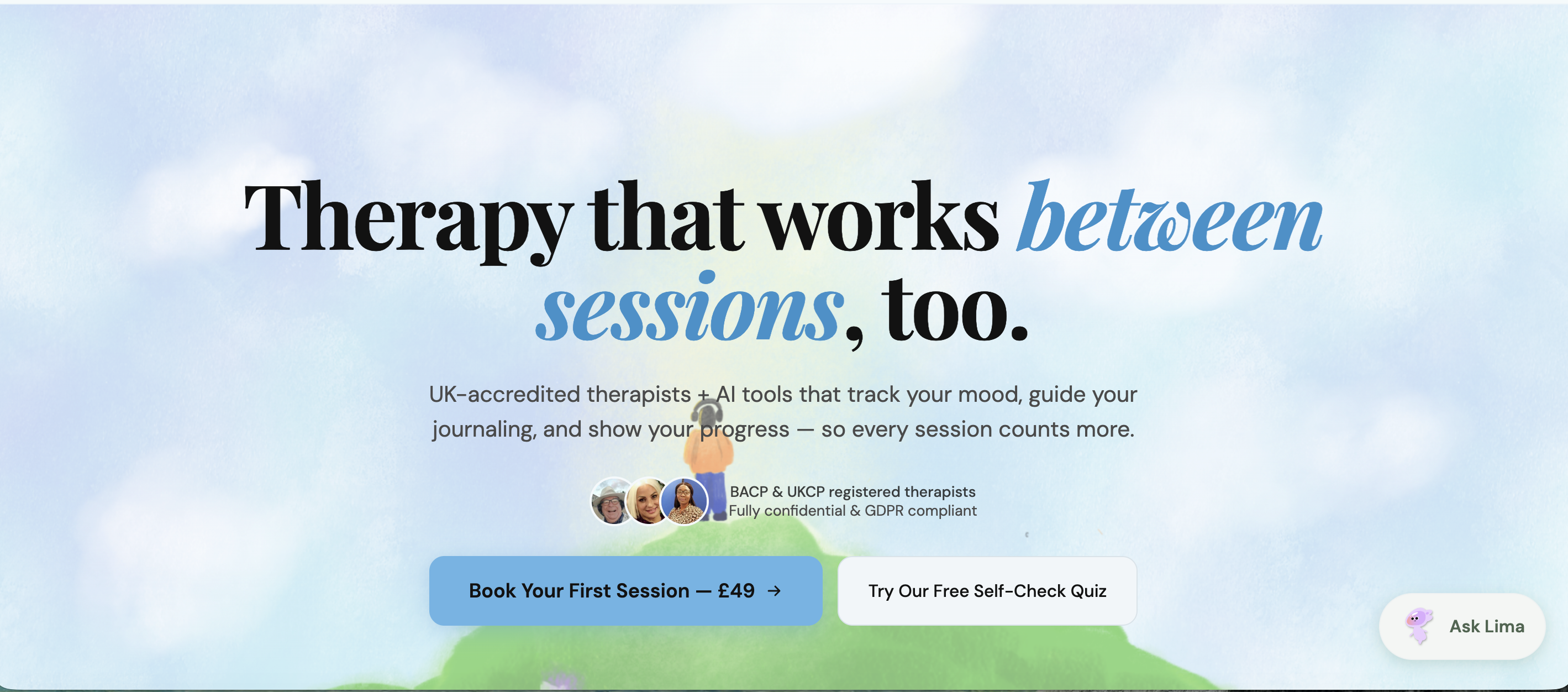
Sessions are available as individual video therapy, live chat counselling from £49, or avatar-based sessions for those who prefer a lower-anxiety format. Evening and weekend appointments are available across all formats. Between sessions, AI journaling and mood-tracking tools keep the work going. For families, child therapy online is available with age-appropriate safeguarding procedures in place.
To get started, browse therapist profiles and book a session directly on the platform, with no long-term commitment required.
Sources
- Online mental health support | Mental Health Foundation
- Springer article on personalised virtual therapy (2025)
- Virtual therapy by video performs similarly to face-to-face sessions | BPS
- Counselling in schools (DfE departmental advice)
This article provides general information about virtual counselling in the UK. It is not a substitute for professional clinical advice. If you are unsure whether virtual counselling is appropriate for your situation, consult your GP or a registered mental health professional.