

TL;DR:
- Blended therapy reduces anxiety recovery time and increases efficiency, requiring fewer sessions.
- Early, flexible online therapy improves outcomes and fits around busy lifestyles, promoting timely support.
- Effective treatment includes CBT and combining high and low-intensity approaches tailored to individual needs.
Anxiety affects millions of UK adults, yet a surprisingly large number treat it as background noise. Something to push through. New research challenges that approach directly. Blended CBT treatment required four fewer sessions on average and was completed 121 days sooner, with a higher reliable recovery rate than standard stepped care. This guide explains what anxiety actually is, what therapy can realistically deliver, how modern formats work around busy lives, and how to take a practical first step toward lasting relief.
Table of Contents
- Understanding anxiety and why it matters
- The benefits of seeking therapy for anxiety
- How therapy for anxiety works: methods, settings, and flexibility
- Taking the first step: preparing for therapy and self-management
- A different perspective: what most people miss about anxiety therapy
- Explore confidential therapy options for anxiety
- Frequently asked questions
Key Takeaways
| Point | Details |
|---|---|
| Professional therapy accelerates recovery | Blended therapy can shorten treatment and increase recovery rates for anxiety. |
| Flexible support fits any schedule | Online and blended therapy makes mental health support more accessible for UK adults. |
| Therapy addresses more than symptoms | Effective therapy techniques improve overall wellbeing, not just reduce anxious feelings. |
| Self-help enhances therapy | Combining self-guided strategies with professional sessions offers optimal outcomes. |
Understanding anxiety and why it matters
Anxiety is not simply worrying more than usual. It is a clinical pattern of responses that affects thoughts, physical sensations, and behaviour in ways that are often invisible to others but deeply disruptive to the person experiencing them. Understanding that distinction matters because it determines how seriously you take the need for support.
Everyday worry is usually tied to a specific situation and fades once that situation resolves. Anxiety, in contrast, can persist without a clear trigger, intensify over time, and begin to shape how you live. It affects what you avoid, how you sleep, how you perform at work, and how you relate to others.
Common symptoms of anxiety include:
- Persistent tension, restlessness, or a sense of dread
- Rapid heart rate, breathlessness, or chest tightness
- Difficulty concentrating or completing tasks
- Sleep disruption, including trouble falling or staying asleep
- Avoidance of situations, places, or relationships that feel threatening
- Irritability or emotional exhaustion after ordinary interactions
The avoidance cycle is one of the most significant reasons anxiety tends to grow without support. When you avoid something that triggers anxiety, the relief you feel in the short term actually reinforces the belief that the situation was dangerous. Over time, the list of things that feel threatening expands. Avoidance is not a solution. It is the mechanism through which anxiety becomes more embedded in daily life.
Seeking professional support earlier typically leads to shorter treatment and a faster return to normal functioning. Waiting until anxiety becomes severe often means more intensive and longer-term intervention is required.
Stepped-care models and blended approaches show evidence-based improvement in recovery times and outcomes, reinforcing the case for acting sooner. If you are unsure where to begin, reviewing the range of therapy types for anxiety can help clarify which approach suits your current situation. Small steps also matter. Practical anxiety-reducing strategies can support day-to-day functioning while you work toward formal support.
The benefits of seeking therapy for anxiety
With a clearer understanding of why anxiety matters, it is worth examining the evidence for what therapy can actually deliver. The results from recent NHS research are more encouraging than many people expect.
A Cambridge University preliminary evaluation found that blended therapy achieved a 54.1% reliable recovery rate, with fewer sessions required and shorter overall treatment timelines compared to standard stepped-care models. That figure is significant. It means more than half of participants reached reliable recovery through an approach that also demanded less of their time.
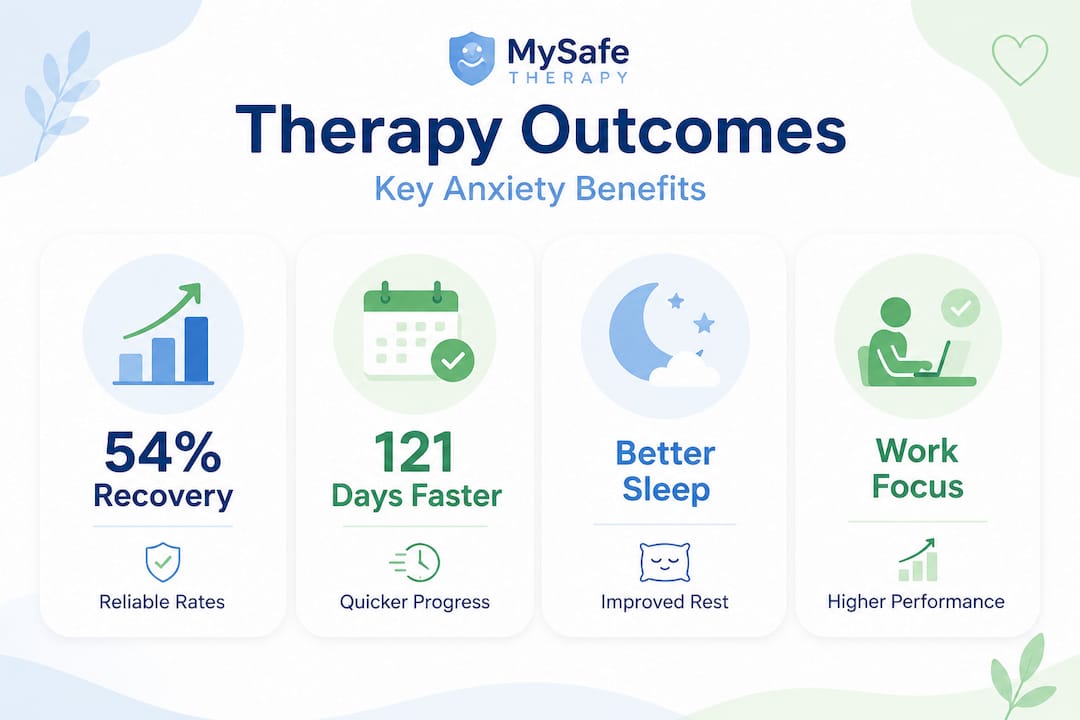
| Therapy format | Avg. sessions | Recovery timeline | Reliable recovery rate |
|---|---|---|---|
| Standard stepped care | Higher | Longer | Comparable baseline |
| Blended CBT approach | Four fewer on average | 121 days shorter | 54.1% |
The benefits extend well beyond clinical recovery rates. Therapy for anxiety consistently improves quality of life across several areas that most people care about deeply.
Sleep is one of the first areas to respond. Anxiety and sleep disruption are closely linked. As anxiety levels reduce through therapy, many people report falling asleep more quickly and waking less frequently during the night. Consistent sleep improvement has a compounding effect on mood, concentration, and energy levels.
Relationships also tend to improve. Anxiety frequently affects communication, patience, and emotional availability. When the underlying patterns of anxious thinking are addressed, interpersonal functioning often follows. You may find yourself less reactive, more present, and better able to sustain connection with the people around you.
Work performance is another meaningful outcome. Concentration difficulties, avoidance of difficult conversations, and decision-making paralysis are all common features of anxiety that affect professional life. Therapy equips individuals with practical tools to manage these patterns rather than being controlled by them.
Pro Tip: Consistency in attending sessions, even when you feel relatively well between appointments, is one of the strongest predictors of long-term therapeutic benefit. Progress often happens in the spaces between sessions, not only within them.
Understanding what a session involves can reduce the apprehension of starting. Reading about therapy session expectations beforehand is a practical way to prepare. If you want to understand which modality might suit you best, exploring therapy fits provides a structured comparison. For a more technical overview, a summary of effective therapy techniques covers the methods most commonly used in evidence-based practice.
How therapy for anxiety works: methods, settings, and flexibility
Knowing the benefits, you might wonder what therapy actually involves and how it can be tailored to your circumstances. The landscape of available support is broader than it was a decade ago, and understanding the options makes it easier to commit to the one that suits your life.
Cognitive behavioural therapy (CBT) is the most widely researched format for anxiety. It works by helping individuals identify the relationship between thoughts, feelings, and behaviours. Once those patterns are visible, they can be challenged and changed in structured, practical ways. CBT is typically time-limited, goal-focused, and skills-based, which makes it well-suited to adults who want measurable progress.
Counselling takes a somewhat different approach. Rather than focusing primarily on thought patterns, counselling tends to explore the experiences, relationships, and circumstances that contribute to distress. It is often better suited to individuals whose anxiety connects to grief, identity, or long-standing relational difficulties.
Self-guided therapy uses structured resources, often digital, to support reflection and skill-building between sessions or as a standalone option. Understanding what self-guided therapy involves can help you decide whether it suits your current needs or works best as a complement to one-to-one support.
| Feature | Online therapy | In-person therapy |
|---|---|---|
| Privacy | High: accessible from home | Moderate: requires travel to a location |
| Flexibility | Evening and weekend options common | Often limited to standard hours |
| Accessibility | No travel required | Dependent on local availability |
| Format choice | Video, chat, avatar-based | Face-to-face only |
| Suitability | Ideal for busy adults | Preferred by some for in-room presence |
Blended therapy can combine high-intensity and low-intensity approaches for efficient outcomes, meaning you are not limited to a single mode of support throughout your treatment.
A typical therapy journey follows this structure:
- Initial contact with a platform or therapist to describe your concerns and goals
- Matching with a therapist whose specialism and approach align with your needs
- A first session to establish the therapeutic relationship and set direction
- Regular sessions at an agreed frequency, typically weekly or fortnightly
- Review points to assess progress and adjust the approach if needed
- Conclusion and a plan for maintaining progress independently
Confidentiality is central to this process. Online therapy provided by accredited practitioners is bound by the same ethical standards as in-person work. Sessions are private, records are secure, and your GP is not automatically informed. This matters for adults who are concerned about disclosure in professional or personal contexts. The benefits of flexible therapy go beyond convenience. Flexibility directly supports attendance, which in turn supports outcomes. When sessions are available in the evening or at weekends, the barrier of having to miss work or rearrange commitments is removed.
It is also worth understanding the role of finding accredited therapists. Accreditation through bodies such as BACP, UKCP, or NCPS provides assurance that the practitioner has met defined training, supervision, and ethical standards. It is a practical safeguard, not just a credential. It is also worth noting that nicotine and anxiety have a complex relationship. Some adults use nicotine products to manage anxious feelings, but the research suggests this can increase baseline anxiety levels over time. This is worth raising with your therapist if it applies to you.
Taking the first step: preparing for therapy and self-management
Once you have decided that therapy could help, the next question is how to get started and what you can do to support your own progress from the outset.
Signs that you may be ready for therapy include:
- Anxiety is affecting your sleep, work, or relationships on a regular basis
- You have tried self-help strategies but found the results limited or temporary
- You are avoiding situations that you would otherwise want to engage with
- You feel as though your worrying is out of proportion to the actual risk involved
- Anxiety has been present for several weeks or months without a clear resolution
Choosing the right therapist involves more than reviewing qualifications. You should also consider their specialism, their communication style, and whether they offer session formats and times that work for you. Many platforms allow you to switch therapists if the initial match does not feel right. This option is important. Therapeutic alliance, the quality of the working relationship between you and your therapist, is one of the strongest predictors of positive outcomes.
Preparing for your first session is a practical step that reduces first-session anxiety and helps you make better use of the time. Think about what you most want to address, what you have already tried, and what a positive outcome would look like for you.
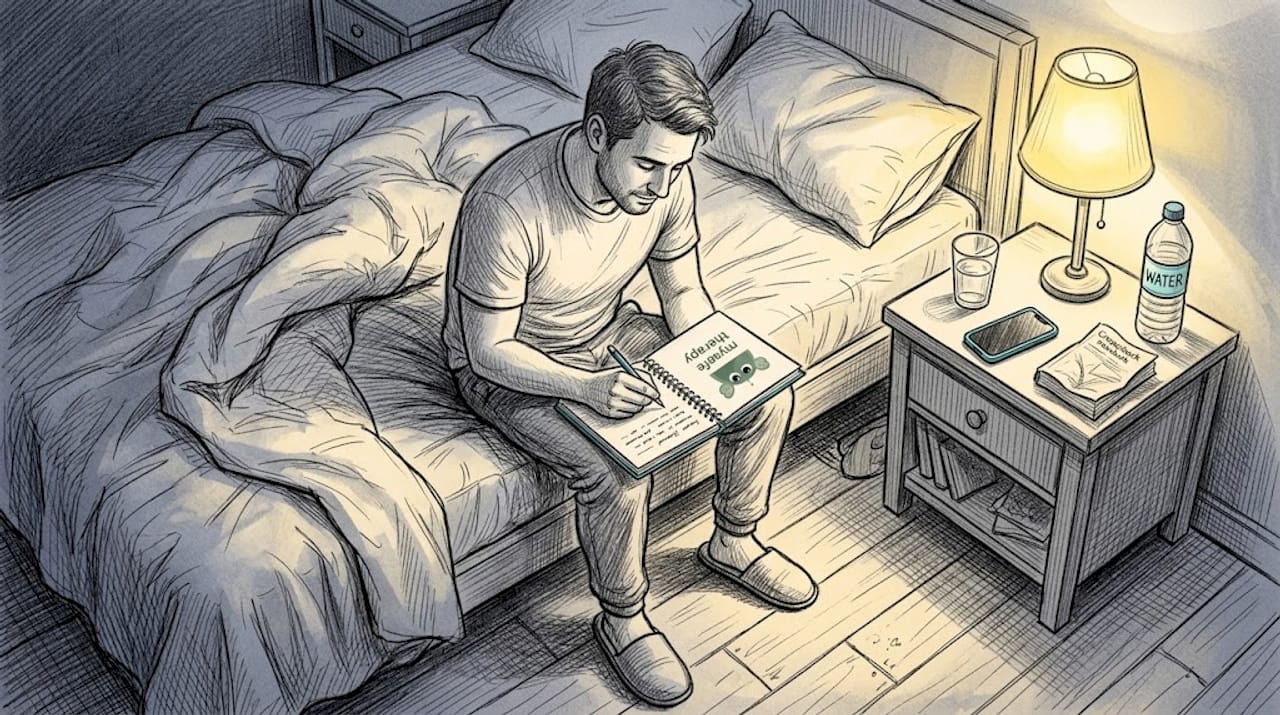
Pro Tip: Keep a brief daily record of your anxiety levels, triggers, and physical symptoms in the week before your first appointment. This gives your therapist concrete information to work with and significantly improves the quality of the initial assessment.
Self-help tools for anxiety work best when used alongside professional support rather than as a substitute for it. Mood tracking, breathing exercises, and structured journalling all reinforce the skills developed in sessions and help you notice patterns that might otherwise go unrecognised. For broader strategies, mental health management tips provide a practical framework for maintaining progress between sessions.
Stepped care and therapist guidance facilitate efficient anxiety relief. Having professional input does not mean you become passive in your own recovery. The most effective outcomes occur when individuals are active participants, applying what they learn in sessions to real situations between appointments.
A different perspective: what most people miss about anxiety therapy
These practical steps are essential, but here is what most people, and even some professionals, miss when thinking about anxiety therapy.
There is a persistent assumption that therapy means committing to months of intense work before anything improves. This assumption keeps many people waiting too long to seek help. The evidence does not support it. Blended models of care are under-utilised despite their efficiency and recovery results. The gap between what is available and what most people access is substantial.
The conventional approach to anxiety support often prioritises self-help first, then therapy only when self-help fails. The logic seems sensible. Try the low-cost option first. But this sequence means many people spend months using strategies that are insufficient for their level of need, all while the anxiety becomes more entrenched. Earlier access to professional support, even briefly and at lower intensity, typically produces better results than prolonged self-management followed by crisis-driven referral.
Flexible online therapy changes the equation further. When sessions are available outside office hours, when there is no commute, and when confidentiality is guaranteed without involving a GP, the barriers that previously stopped people from accessing support are largely removed. This is not a minor convenience. For adults with demanding jobs, caring responsibilities, or concerns about professional disclosure, it can be the difference between accessing support and not doing so.
What we observe consistently is that adults who engage with flexible therapy sessions earlier in their anxiety journey require fewer sessions overall and report more durable improvements. The model works precisely because it fits around real life rather than requiring real life to pause.
Continuous professional support also outperforms self-help alone in sustained anxiety management. Self-help tools are valuable, but they cannot replicate the calibration that a trained therapist provides. Knowing when to push, when to consolidate, and when a different approach is needed requires professional judgement. That is what makes therapy structurally different from a workbook or an app.
Explore confidential therapy options for anxiety
If this article has helped clarify why therapy matters and what it can realistically achieve, the most useful next step is finding a format that fits your life without requiring you to compromise on privacy, quality, or flexibility.
MySafeTherapy connects UK adults with BACP, UKCP, and NCPS-accredited therapists through a secure, fully confidential platform. Sessions are available via video, chat, or avatar-based formats, with evening and weekend appointments to accommodate busy schedules. There is no requirement to involve your GP, no public waiting room, and no obligation to continue with a therapist who is not the right fit. The process is transparent, with clear pricing and no hidden commitments. If you are ready to take the first step, you can start therapy today and be matched with an accredited therapist suited to your specific needs.
Frequently asked questions
How quickly can therapy help with anxiety?
Blended therapy reduced recovery time by an average of 121 days compared to standard stepped care, suggesting that modern approaches can deliver results significantly faster than most people expect.
Is online therapy as effective as in-person sessions?
Recovery rates for blended therapy reached 54.1%, comparable to stepped care, while also offering the added benefits of privacy, accessibility, and scheduling flexibility that online formats provide.
What type of therapy works best for anxiety?
CBT is the most extensively researched and widely recommended approach, but blended CBT's effectiveness suggests that combining high-intensity and low-intensity methods in a personalised format can produce faster and more durable results.
Can I combine self-help with professional therapy?
Combining structured self-help tools with therapist-guided stepped care is actively encouraged and typically produces better outcomes than either approach used in isolation.
Recommended
- Your complete guide to therapy sessions for anxiety
- Types of therapy for anxiety: find your best fit
- How to prepare for therapy for anxiety and depression
- How to use self-help tools for anxiety and depression
- Massage therapy benefits: Relieve pain and stress effectively
- Why Naming Your Feelings Helps — The Caia Journal