
TL;DR:
- Digital tools enhance access to mental health support but cannot replace the human therapeutic relationship.
- Regulation distinguishes between safe, evidence-based medical apps and wellbeing apps with limited oversight.
- A blended approach combining technology and human support yields the most durable mental health outcomes.
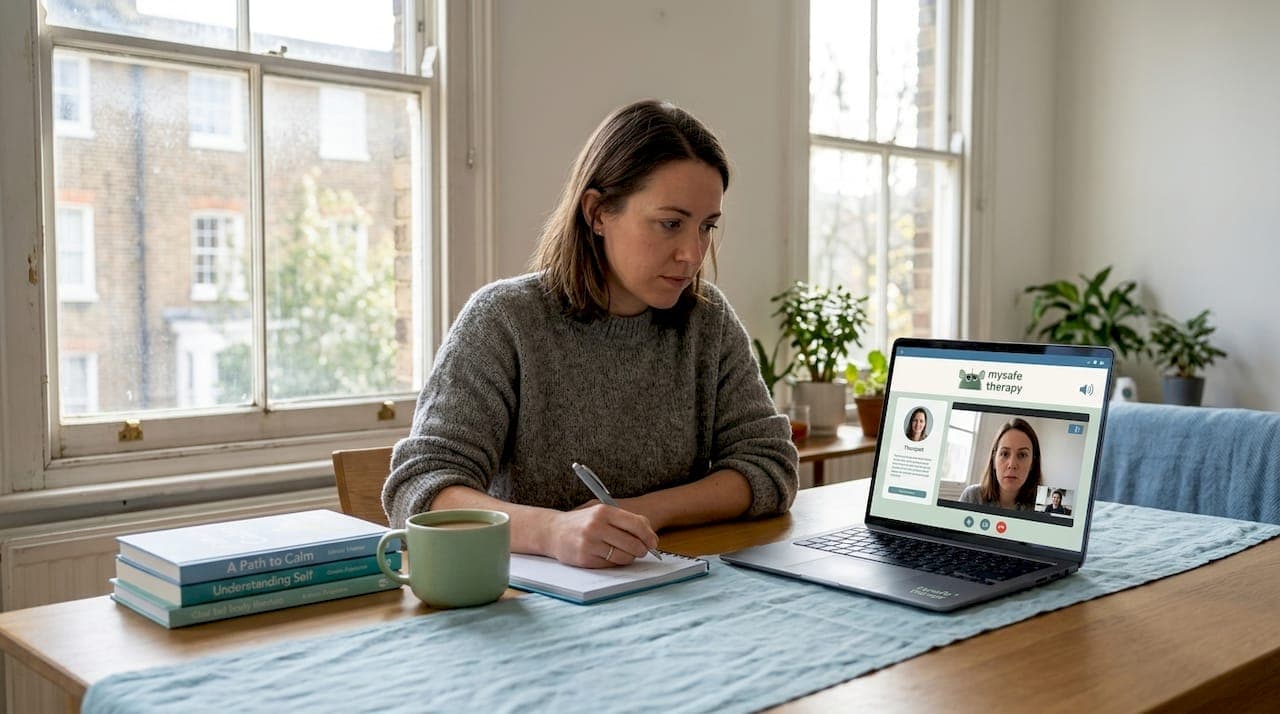
Technology is reshaping how people in the UK access and experience mental health support. Smartphones, AI-powered tools, and online platforms have made it easier than ever to connect with therapy services, yet a persistent misconception remains: that apps and digital tools can simply replace a qualified therapist. The reality is considerably more nuanced. Understanding where technology genuinely helps, and where it falls short, matters enormously for anyone navigating mental health support in the UK. This article sets out a clear, evidence-based picture of how digital tools can enhance, rather than substitute, the therapeutic relationship.
Table of Contents
- Understanding the integration of technology in therapy
- Safety, evidence, and regulation: What UK adults need to know
- How technology complements, rather than replaces, human connection
- Practical ways to use technology for mental health support
- Why blending technology and human support leads to the best outcomes
- Ready to enhance your therapy journey?
- Frequently asked questions
Key Takeaways
| Point | Details |
|---|---|
| Tech supplements therapy | Technology enhances access and support but does not replace human therapists. |
| Check for regulation | Look for UKCA or CE marks and verify NHS-recommended tools before use. |
| Blend for best results | The most effective approach blends digital and human support in your therapy journey. |
| Stay informed and safe | Understand safety, privacy, and reporting processes when using digital therapy tools. |
Understanding the integration of technology in therapy
The term digital mental health technologies covers a broad range of tools, from smartphone applications and online therapy platforms to AI chatbots and wearable devices designed to monitor wellbeing. Within therapy specifically, teletherapy refers to delivering clinical therapeutic services remotely via video, telephone, or text-based communication. Therapy apps, by contrast, are software programmes designed to support mental wellbeing between professional sessions or as standalone tools, though their clinical rigour varies considerably.
The NHS and the National Institute for Health and Care Excellence (NICE) have both moved to encourage evidence-based digital approaches. NICE, in particular, provides a structured way of thinking about these tools. The NICE Evidence Standards Framework classifies digital health technologies into tiers requiring clinical evidence (such as randomised controlled trials for high-impact tools), safety data, and economic value for NHS adoption. This tiered classification means not every app on the market meets the same standard. A general mindfulness programme sits in a very different category to a clinically validated platform designed to treat depression.
Despite 1 in 4 UK adults experiencing a mental health condition each year, only around 20% access therapy, leaving a significant gap that digital tools are positioned to help address. Common forms of technology in this space include:
- Video therapy platforms enabling real-time sessions with accredited therapists
- Self-help apps offering cognitive behavioural therapy (CBT) exercises and guided practices
- AI chatbots providing structured conversations between therapy sessions
- Mood tracking tools helping users identify patterns over time
- Online journalling platforms that support reflection and self-awareness
The table below summarises the key categories of digital mental health tools and their typical purpose:
| Tool type | Primary purpose | Clinical evidence required |
|---|---|---|
| Teletherapy platform | Live therapy delivery | High (regulated service) |
| CBT-based app | Self-guided therapy exercises | Moderate (NICE reviewed) |
| AI chatbot | Between-session support | Variable |
| Mood tracker | Symptom monitoring | Low to moderate |
| Wellbeing/lifestyle app | General mental fitness | Minimal |
Understanding these distinctions helps when choosing personalised therapy in the UK, and knowing the types of online therapy available is an important first step before selecting any digital support.
Safety, evidence, and regulation: What UK adults need to know
With digital mental health tools proliferating rapidly, understanding the regulatory landscape is essential before choosing any platform or app. The Medicines and Healthcare products Regulatory Agency (MHRA) is the UK body responsible for overseeing medical devices, and this includes certain software applications. MHRA guidance on mental health apps makes clear that apps classified as Software as a Medical Device (SaMD) must carry a UKCA or CE mark, be registered appropriately, and meet standards covering clinical evidence, data privacy, and age-appropriateness.
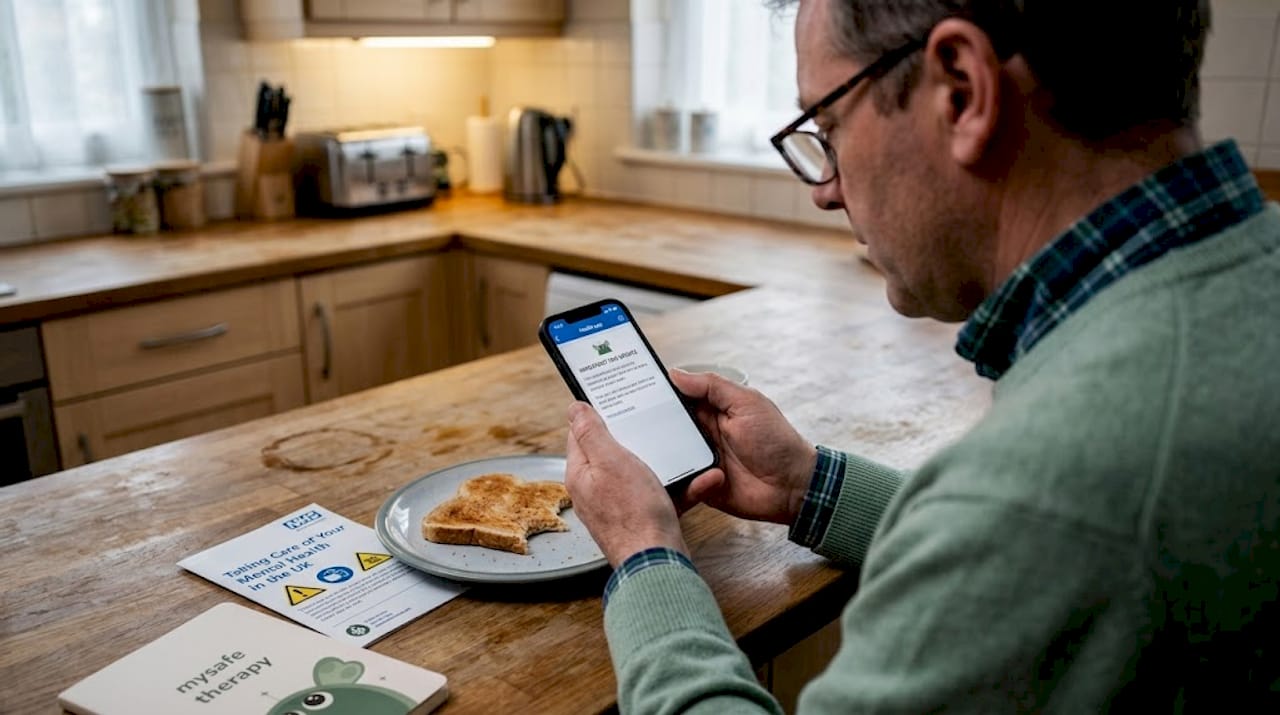
The critical distinction here is between a regulated medical app and a wellbeing or lifestyle app. A regulated app actively diagnoses or treats a mental health condition. A wellbeing app offers general support such as breathing exercises or sleep guides, but makes no clinical claims. Both can be useful, but they operate under very different rules.
| Feature | Regulated medical app | Wellbeing/lifestyle app |
|---|---|---|
| UKCA/CE mark required | Yes | No |
| Clinical evidence required | Yes (RCT level) | Not mandatory |
| MHRA registration | Yes | No |
| Can diagnose/treat conditions | Yes | No |
| Data protection standards | Strict | Variable |
Before downloading any mental health app, consider checking the following:
- Does the app carry a UKCA or CE mark if it makes clinical claims?
- Is the developer transparent about how your data is stored and used?
- Is there published clinical evidence supporting the app's effectiveness?
- Is the app age-appropriate for your situation?
- Has it been reviewed or recommended by the NHS App Library or a registered clinician?
The therapy safety guide provides further detail on evaluating platforms, and the broader picture of UK therapy regulations explains the professional standards that govern registered therapists.
Pro Tip: If you experience a problem with a regulated mental health app or digital device, you can report it through the UK's Yellow Card scheme, the same reporting system used for medicines. This helps the MHRA monitor safety issues and protect other users. You can find the report link via the MHRA website.
It is also worth noting that regulation does not automatically make a tool useful. An app may be fully compliant and still offer limited benefit for your particular situation. Cross-referencing clinical guidance, professional recommendations, and your own mental health management tips remains important when building a sustainable approach.
How technology complements, rather than replaces, human connection
One of the most important things to understand about digital mental health tools is what they genuinely do well, and where they consistently fall short. Technology is highly effective at scaling access to support. It removes geographical barriers, reduces waiting times, and allows people to engage with structured exercises at any time of day. However, it cannot replicate the relational quality of working with a skilled human therapist.
Expert opinion on this point is consistent. Evidence across research highlights that while digital tools are effective as adjuncts and provide scalable support, they cannot replace human empathy or the therapeutic relationship. Persuasive design features within apps do not consistently improve engagement or outcomes. Where digital tools genuinely add value, it tends to be when they incorporate structured elements such as exposure tasks, activity scheduling, or behavioural activation, rather than passive content consumption alone.
Consider these real-world scenarios where technology adds clear value:
- Between-session support: A chatbot can prompt you to complete a CBT thought record on a difficult evening when your therapist is unavailable
- Mood tracking: Logging mood data daily gives your therapist concrete patterns to work with, rather than relying solely on memory during sessions
- Mindfulness reminders: Automated prompts help establish consistent practice habits
- Progress monitoring: Apps that track symptom scores over weeks can reveal improvement trends that are motivating and clinically useful
"Technology's greatest strength in mental health is reach, not depth. It puts support in front of people who would otherwise have nothing. But sustainable recovery relies on someone knowing your story, not just your data."
Approximately 28% of young adults already use AI-based support tools, yet consistently report preferring the depth and responsiveness of human engagement when working through complex issues. This finding captures the central tension well. Digital tools meet an immediate accessibility need, but most people recognise instinctively that a chatbot cannot hold space in the way a person can.
Understanding the range of therapy techniques that skilled clinicians use also clarifies why human involvement remains irreplaceable. Therapists respond to non-verbal cues, adjust their approach in real time, and build a relational trust that directly contributes to clinical outcomes. No app currently replicates that process reliably.
Pro Tip: Think of technology as the scaffolding around your therapy, not the building itself. Use it to reinforce what you work on with your therapist, but resist the temptation to treat it as a substitute when sessions feel difficult or distant.
Practical ways to use technology for mental health support
Knowing that technology works best alongside human therapy, the practical question becomes: how do you actually build a blended approach that works for you? The following steps provide a structured pathway.
-
Identify your current support needs. Are you waiting for therapy to begin? Looking to reinforce what you are already working on? Or managing mild symptoms independently? Your starting point shapes which tools are appropriate.
-
Choose tools backed by evidence. Check the NHS Apps Library, look for NICE-reviewed tools, or ask your therapist directly. Platforms backed by published research are significantly more likely to produce measurable benefit. Technology scales access to support amid ongoing NHS demand, but real-world engagement remains the key challenge.
-
Start with one tool, not five. A common mistake is downloading multiple apps and engaging with none of them consistently. Choose one mood tracker, or one journalling platform, and use it regularly for four to six weeks before evaluating its usefulness.
-
Integrate findings into your therapy sessions. Bring your mood logs, journal entries, or app-generated reports to your sessions. This transforms passive data collection into active therapeutic material. Your therapist can help interpret patterns and adjust goals accordingly.
-
Use technology for between-session continuity. Self-help tools such as guided breathing exercises, audio-based mindfulness, and structured thought records are most valuable when used consistently in the hours and days between appointments.
-
Review and adjust regularly. Every few weeks, assess whether a tool is genuinely contributing to your progress. If it is causing additional stress, taking excessive time, or simply sitting unused, it is appropriate to stop using it.
Key questions to ask when evaluating a potential tool:
- Does my therapist know I am using this, and do they support it?
- Is the tool evidence-based and appropriately regulated?
- Is it helping me practise skills, or simply distracting me?
- Does it protect my personal data appropriately?
"The most effective digital tools are the ones that make you do something, not just read something. Active practice, however small, consistently outperforms passive information consumption."
The therapy resources available to UK adults have expanded significantly in recent years, and the accessible therapy guide outlines the full process from initial enquiry to ongoing support.
Pro Tip: At the start of any new therapy relationship, ask your therapist which specific digital tools, if any, they would recommend to complement your work together. Many accredited therapists have clear preferences based on clinical experience, and their guidance will be far more tailored than any generic app store recommendation.
Why blending technology and human support leads to the best outcomes
From a clinical and practical standpoint, the evidence for a blended approach is more persuasive than most people realise. Technology excels at one thing: making support available at the moment it is needed. Human therapists excel at something quite different: providing the relational conditions under which lasting change becomes possible.
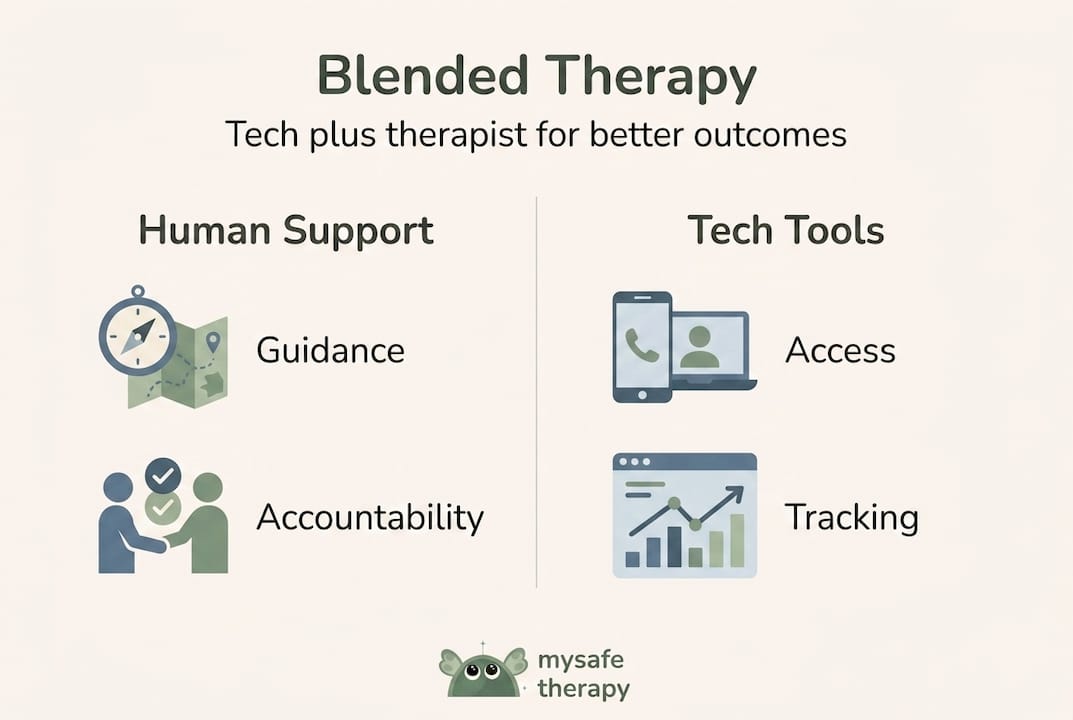
What many people underestimate is how much sustainable improvement depends on accountability. A human therapist holds a record of your story, notices subtle shifts in how you speak about your experiences, and adapts their approach accordingly. No algorithm currently does this with comparable accuracy or warmth. What many people overestimate is how much technology alone can accelerate recovery. Downloading a highly rated app creates a sense of action, but without consistent use and integration with professional support, the benefit remains limited.
There is also a less-discussed risk: technology fatigue. When someone is already overwhelmed by anxiety or low mood, navigating multiple digital platforms can compound the sense of burden rather than relieve it. The most effective blended approaches tend to be simple and deliberately chosen, not exhaustive. Guided personalised therapy remains the cornerstone, with technology serving a specific and limited supporting role. That combination, structured human relationship plus targeted digital tools, consistently produces the most durable outcomes.
Ready to enhance your therapy journey?
MySafeTherapy brings together accredited UK therapists and purpose-built digital tools in a single, secure platform designed around your schedule and preferences.
Whether you prefer one-to-one video sessions, chat-based therapy, or avatar-based formats, you can access evening and weekend appointments with therapists registered with BACP, UKCP, or NCPS. Built-in tools such as AI journalling and mood tracking sit alongside your live sessions, giving you a genuinely blended experience. Pricing is clear, switching therapists is straightforward, and your privacy is protected at every step. If you are ready to take the next step, start therapy online and find the right combination of human support and digital tools for your situation.
Frequently asked questions
Are digital therapy apps in the UK safe and regulated?
Some apps are regulated as medical devices and must carry a UKCA or CE mark; always check for these marks and follow MHRA guidance on mental health apps before using any app that makes clinical claims.
Can technology fully replace seeing a therapist in the UK?
No, current evidence consistently shows that technology is most effective when it complements human therapy, as it cannot replicate the empathy and relational depth that a qualified therapist provides.
How do I report a problem with a therapy app or digital tool?
Use the UK's Yellow Card scheme to report safety concerns with regulated mental health technologies, as the MHRA guidance specifically covers Software as a Medical Device incidents.
Does the NHS recommend using digital therapy tools?
Yes, the NHS supports evidence-based digital tools as part of a broader mental health strategy; the NICE Evidence Standards Framework sets out the clinical and economic criteria tools must meet for NHS adoption and recommendation.