

TL;DR:
- Switching therapists does not reliably improve therapy outcomes, as individual therapist variance is minimal.
- Engagement, clear communication, and the therapeutic approach matter more than changing therapists.
- Practical and emotional factors influence therapy success, with NHS settings being less flexible than private options.
Many UK adults reach a point in therapy where progress feels slow, the relationship feels off, or they simply wonder whether a different therapist might help more. It is a reasonable question, and one that more people are asking. Yet the evidence behind therapist switching is often misunderstood. Research suggests that switching therapists offers no outcome advantage in depression psychotherapy, which challenges the widespread belief that a new therapist automatically means better results. This article examines why people switch, what the data shows, how NHS and private settings differ, and what practical steps to take if you are considering a change.
Table of Contents
- Why switch therapists? Motivation and misconceptions
- Evidence: Does switching therapists improve outcomes?
- NHS vs private therapy: Choice, flexibility, and switching
- How to approach switching: Best practices and next steps
- The uncomfortable truth about therapist switching
- Find the right support on your therapy journey
- Frequently asked questions
Key Takeaways
| Point | Details |
|---|---|
| Switching rarely changes outcomes | Empirical evidence shows the therapist switch itself does not often lead to improved results. |
| NHS vs private: practical differences | Switching therapists is usually quicker and easier in private therapy compared to NHS settings. |
| Fit matters more than credentials | Personal comfort and communication are sometimes more impactful than therapist qualifications. |
| Prepare and plan your switch | Carefully assess your reasons and review your options to minimise disruption when changing therapists. |
Why switch therapists? Motivation and misconceptions
People consider switching therapists for a range of reasons. Some feel their current therapist does not understand them. Others sense a lack of progress after several months. Communication problems, mismatched therapeutic approaches, or simple discomfort can all play a role. These are legitimate concerns, and they deserve to be taken seriously.
Common reasons people consider switching include:
- Poor therapeutic fit: Feeling misunderstood or judged, even subtly
- Lack of visible progress: Sessions feel repetitive or stuck
- Communication difficulties: The therapist's style does not match your needs
- Practical issues: Scheduling, location, or cost become unmanageable
- Change in circumstances: Your presenting issue has shifted significantly
The misconception most people carry is that switching therapists will automatically produce better outcomes. This assumption feels logical. If one approach is not working, try another. But the data complicates this. Therapist variance accounts for only 1.1% of total outcome variance in psychotherapy research, with site variance slightly higher at 1.7%. In other words, the individual therapist contributes far less to your recovery than most people assume.
This does not mean fit is irrelevant. It means that the therapeutic relationship, your own readiness to engage, and the quality of the approach matter more than the specific individual delivering it. Understanding therapist matching in online therapy can help clarify what fit actually means in practice, beyond surface-level preferences.
In the UK, there is also a cultural layer to consider. Many people feel reluctant to raise dissatisfaction with their therapist directly, worrying it will seem rude or ungrateful. This leads to silent disengagement rather than open dialogue. The result is often dropout rather than a productive switch or a repaired working relationship. Familiarising yourself with effective therapy techniques can help you articulate what is and is not working before making any decision.
Pro Tip: Before deciding to switch, write down three specific things that are not working in your current therapy. If you cannot name them clearly, a direct conversation with your therapist may resolve more than a switch would.
Evidence: Does switching therapists improve outcomes?
The short answer, based on current research, is: not reliably. A key study on major depressive disorder (MDD) found that switching therapists offers no significant outcome advantage in psychotherapy. Outcome differences between therapists are small, and most variance in recovery is explained by patient-level factors rather than who is delivering the treatment.
Let us look at how this plays out in the UK context:
| Metric | NHS Talking Therapies | Private therapy |
|---|---|---|
| Reported recovery rate | ~50% | Varies by provider |
| Dropout rate | ~45% | Generally lower |
| Therapist choice | Limited | High |
| Wait time | Weeks to months | Often days |
| Switching ease | Restricted | Flexible |
The NHS Talking Therapies programme reports a recovery rate of approximately 50%, but a dropout rate of around 45%. That dropout figure is significant. It suggests that many people disengage before completing treatment, which itself reduces the chance of recovery regardless of which therapist they see.
"The evidence consistently shows that therapist-level variance in outcomes is small. What matters most is whether the patient remains engaged in treatment long enough for it to work."
This reframes the switching question. Rather than asking "would a different therapist help me more?", a more productive question might be "what is preventing me from engaging fully with therapy as it stands?" Sometimes the answer is genuine incompatibility. But often it is an unspoken concern, an unmet expectation, or a practical barrier that could be addressed without changing therapist at all.
Understanding UK therapy regulations can also help you assess whether your current therapist is practising appropriately, which is a separate and important question from whether switching would improve your outcomes. For those using digital services, online therapy safety is equally relevant when evaluating any new provider.
NHS vs private therapy: Choice, flexibility, and switching
The practical realities of switching therapists differ considerably depending on whether you are accessing therapy through the NHS or privately. Both routes have genuine strengths, but they impose different constraints.
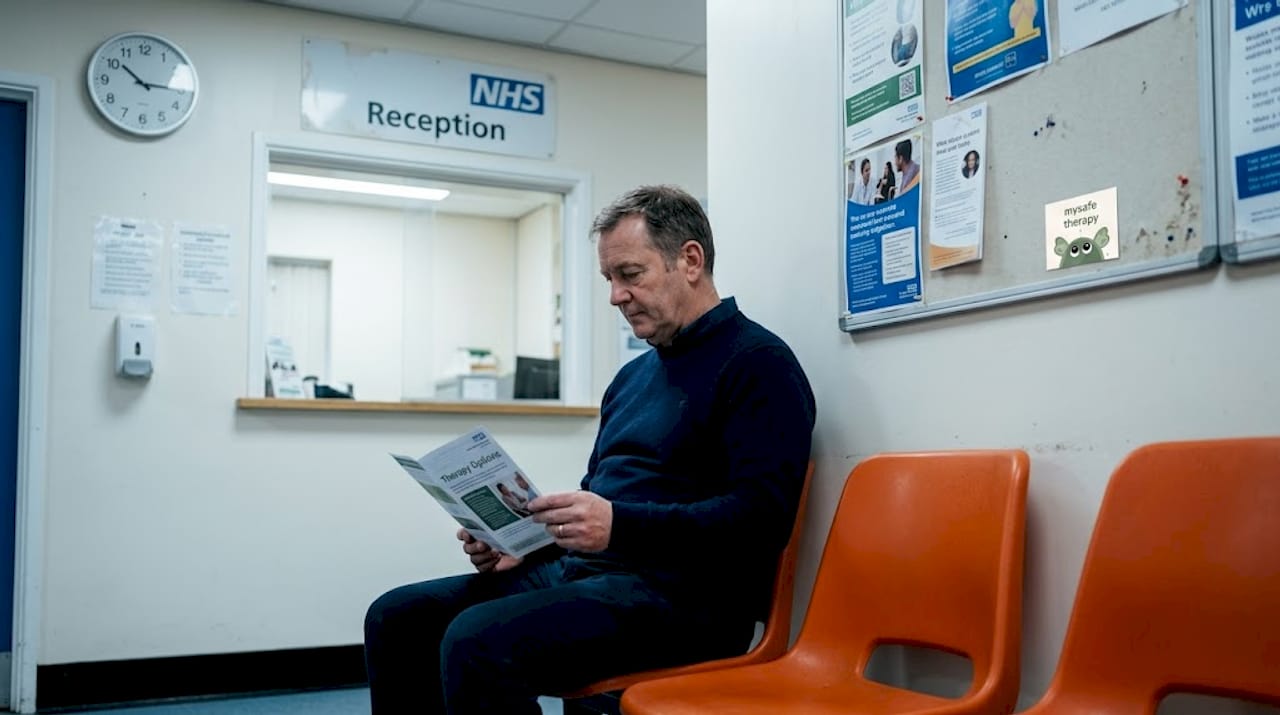
In NHS settings, therapist choice is limited. You are typically assigned a therapist based on availability and specialism, not personal preference. Requesting a change is possible, but it often involves going back through an assessment process and waiting again. NHS waiting times and restricted therapist choice create practical barriers that can delay treatment significantly, sometimes by months.
| Factor | NHS | Private |
|---|---|---|
| Therapist selection | Assigned | You choose |
| Switching process | Formal reassessment | Usually straightforward |
| Cost | Free at point of use | Fee per session |
| Session flexibility | Fixed slots | Evenings, weekends |
| Speed of access | Weeks to months | Often within days |
Private therapy offers considerably more flexibility. You can typically browse therapist profiles, read about their approach, and request a change if the fit is not right, often without a formal process. This flexibility supports flexible therapy sessions and makes it easier to find personalised mental health support that suits your specific needs.
Key practical differences to consider:
- NHS switching requires patience and may reset your position in the queue
- Private switching is usually faster but carries a financial cost
- Mid-treatment switching from NHS to private is possible and sometimes advisable if waiting is causing harm
- Online platforms often offer the widest range of types of online therapy, making it easier to find a good fit from the outset
Pro Tip: If you are on an NHS waiting list and your mental health is deteriorating, accessing private therapy in the interim does not forfeit your NHS referral. You can continue both in parallel or transition fully once NHS treatment begins.
For those who want to supplement any form of therapy, therapy self-help resources can provide useful support between sessions while you navigate any transition.
How to approach switching: Best practices and next steps
If you have reflected carefully and decided that switching is the right move, a structured approach reduces disruption and improves the likelihood of a good outcome with your next therapist.
- Clarify your reasons in writing. Be specific about what has not worked. Vague dissatisfaction is harder to resolve with a new therapist than a concrete concern.
- Speak to your current therapist first. This is not always comfortable, but raising concerns directly often produces more change than switching. Many therapists will adjust their approach if given clear feedback.
- Research your next options before ending current therapy. Avoid a gap in support wherever possible. Continuity matters, particularly if you are managing anxiety or depression.
- Inform your current therapist of your decision. You do not owe a lengthy explanation, but a brief, honest conversation is good practice and helps close the therapeutic relationship properly.
- Request a summary or notes transfer if appropriate. In private settings, you may be able to share relevant background with your new therapist, reducing the time spent repeating your history.
- Set realistic expectations. A new therapist will need time to understand your situation. Progress rarely accelerates immediately after switching.
The dropout statistics from NHS Talking Therapies highlight how important preparation and realistic expectations are. Dropping out entirely is rarely the best outcome, even when the current arrangement is imperfect.
Pro Tip: Give any new therapist at least four to six sessions before assessing fit. First sessions are often awkward and exploratory. Genuine connection and progress typically take time to develop.
For a broader view of what is available, reviewing mental health support options can help you identify whether a different format, such as group therapy or digital support, might suit you better than a straight therapist swap.
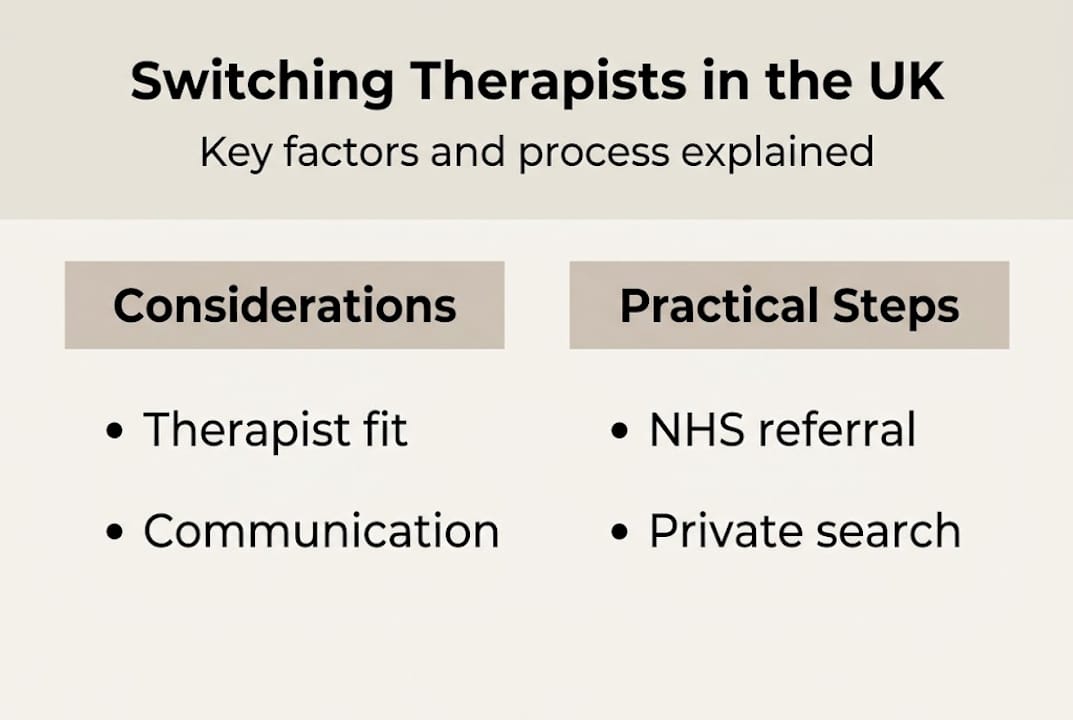
The uncomfortable truth about therapist switching
Most guides on this topic frame therapist switching as a straightforward act of self-advocacy. Find a better fit, get better results. That framing is not wrong, but it is incomplete.
The evidence tells a more nuanced story. Therapist variance in outcomes is remarkably low, which means the instinct to seek a different therapist as a solution to slow progress may sometimes be misplaced. What often matters more is whether you are ready to engage, whether you have communicated your needs clearly, and whether the therapeutic approach itself is appropriate for your situation.
In UK practice, there is also a tendency to underestimate the disruption that switching causes. Starting over with a new therapist takes time and emotional energy. The early sessions of any therapeutic relationship involve building trust, which is not instant.
This is not an argument against switching. Sometimes the fit is genuinely wrong, and staying in a mismatched therapeutic relationship does more harm than good. But the decision deserves more scrutiny than popular advice typically offers. Understanding therapist matching from the outset reduces the likelihood of needing to switch at all.
Find the right support on your therapy journey
If you are weighing up whether to stay with your current therapist or start fresh, having access to genuine choice from the beginning makes a significant difference.

MySafeTherapy connects you with UK-accredited therapists registered with BACP, UKCP, and NCPS, across a range of formats including video, chat, and avatar-based sessions. Evenings and weekends are available, and switching therapists within the platform is straightforward if your needs change. You can start therapy with clarity about who you are working with and why, reducing the uncertainty that leads to dropout or dissatisfaction. Transparent pricing, flexible scheduling, and easy access to self-help tools mean support is available on your terms, not the system's.
Frequently asked questions
Does switching therapists actually improve recovery?
Research shows that changing therapists does not significantly affect overall recovery rates in depression therapy, as therapist-level variance in outcomes is very small.
Are there practical risks or disruptions in switching therapists?
Switching may lead to temporary delays or disruption, particularly in NHS settings where reassessment is often required, but NHS hurdles contrast with private flexibility, making private transitions generally smoother.
How do I decide if switching is right for me?
Assess your specific reasons for dissatisfaction and consider whether direct communication might resolve them first, since therapist variance accounts for only 1.1% of outcome differences, suggesting fit is more nuanced than it appears.
What is the NHS therapy dropout rate?
Approximately 45% of NHS Talking Therapies patients drop out before completing treatment, underscoring the importance of engagement and realistic expectations over switching alone.