

TL;DR:
- User comfort is a crucial factor influencing therapy engagement and outcomes.
- Effective online platforms incorporate design, privacy, and person-centred approaches to foster comfort.
- Comfort factors significantly impact session attendance, module completion, and symptom reduction.
Therapy is often discussed in terms of technique and qualification. Rarely do people question whether the environment itself changes results. Yet evidence increasingly shows that how comfortable a person feels during therapy directly shapes how much benefit they receive. This is not a minor variable. Comfort determines whether someone attends sessions, whether they are honest with their therapist, and whether they persist long enough to see genuine improvement. Understanding this mechanism can change how you approach finding and engaging with mental health support.
Table of Contents
- Understanding user comfort in therapy
- How therapists and platforms build user comfort
- The impact of user comfort: engagement and therapy outcomes
- Nuances and limits: edge cases and best-fit guidance
- What most articles miss about user comfort in online therapy
- Explore therapy options focused on your comfort
- Frequently asked questions
Key Takeaways
| Point | Details |
|---|---|
| Comfort drives engagement | User comfort increases session attendance and adherence, leading to better therapy outcomes. |
| Safe design matters | Low-stimulus interfaces and secure systems help users feel safe and reduce stress during online sessions. |
| Therapist training is essential | Ongoing professional development ensures therapists can provide supportive, confidential online care. |
| Not all cases fit digital | Severe or complex cases may require in-person care for rapport and privacy. |
Understanding user comfort in therapy
User comfort in therapy refers to a person feeling safe, relaxed, and genuinely heard throughout the therapeutic process. It is not simply about physical surroundings. It includes emotional safety, perceived confidentiality, a sense of control over the process, and trust in the therapist. When these elements are present, people open up more readily and engage more consistently with therapeutic work.
Comfort also lowers the barriers that typically prevent people from seeking or continuing therapy. Stigma is one of the most significant. Many adults in the UK avoid discussing mental health concerns because of shame or fear of judgement. Online therapy reduces some of this friction by allowing people to access support from a private, familiar environment. The simple act of attending a session from home, rather than walking into a clinic, can make a meaningful difference for someone struggling with social anxiety or depression.
Privacy and scheduling flexibility further contribute to a sense of comfort. When people feel they have control, including when and how they attend therapy, engagement levels rise. This is supported by evidence from multiple research programmes. Personalised therapy formats that allow users to choose session timing, format, and communication style show stronger retention than rigid, one-size-fits-all models.
Several factors define user comfort in a therapeutic context:
- Emotional safety: The ability to speak freely without fear of judgement or breach of confidentiality.
- Environmental control: The capacity to choose a setting, time, and format that suits personal circumstances.
- Therapist rapport: A consistent, trusting relationship with a qualified professional.
- Technical reliability: A stable platform that does not create friction or frustration during sessions.
- Transparency: Clear understanding of costs, process, and what to expect.
The data on this is notable. Research shows that patients completing 64.7% of modules in guided internet-based cognitive behavioural therapy (iCBT) experienced significant reductions in depression and anxiety symptoms, with persistence directly predicting better outcomes. The more comfortable and engaged a person feels, the more likely they are to complete the work. Blended formats that combine digital and in-person elements have also been shown to boost adherence, suggesting that flexibility in how therapy is delivered is itself a comfort mechanism.
"Comfort in therapy is not incidental. It is a prerequisite for engagement, and engagement is the mechanism through which outcomes improve."
Effective therapist matching further reinforces comfort. When a person feels their therapist understands them, not just their diagnosis but their communication preferences and personal boundaries, the therapeutic alliance strengthens. That alliance is consistently identified in research as one of the most powerful predictors of therapy success.
How therapists and platforms build user comfort
Creating comfort is not accidental. Effective online therapy platforms and skilled therapists use deliberate strategies to build it systematically. These strategies span interface design, professional standards, technological infrastructure, and ongoing clinical development.
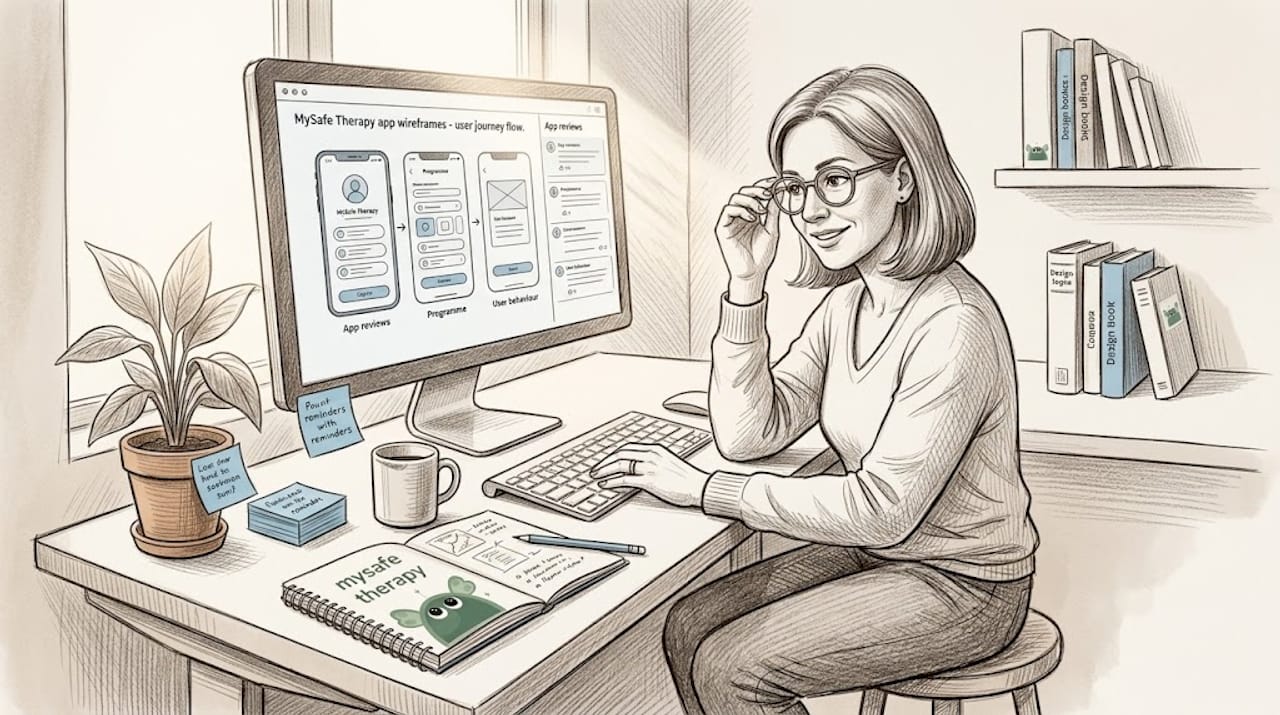
On the platform side, low-arousal user experience (UX) design plays a significant role. This means interfaces built with muted colour palettes, simple navigation structures, and minimal visual clutter. For someone already experiencing anxiety or depressive symptoms, a complex or overstimulating app can itself become a barrier. Research confirms that low-stimulus UX designs in mental health apps create a validated "digital safe space," particularly for users with depression or PTSD, reducing cognitive overload and the risk of alienation before a session even begins.
Security and privacy infrastructure are equally important. Platforms that use end-to-end encryption, two-factor authentication, and GDPR-compliant data practices signal to users that their information is protected. This is not simply a legal obligation. It is a comfort mechanism. When people trust that what they share will not be exposed, they are more likely to share honestly. Our accessible online therapy guide covers the practical steps users can take to assess whether a platform meets these standards before committing.
From the therapist side, a person-centred approach is essential. This means tailoring sessions to the individual's needs rather than following a rigid protocol. It also means therapists maintaining continuous professional development (CPD) in online-specific competencies. The British Association for Counselling and Psychotherapy (BACP) sets standards for online therapy practice, including guidance on assessing suitability, managing risk remotely, and maintaining boundaries in digital settings. Therapists registered with BACP, UKCP, or NCPS are held to these standards, which directly benefits the people they work with.
| Feature | Lower comfort impact | Higher comfort impact |
|---|---|---|
| Interface design | Complex, cluttered, high-stimulus | Minimal, muted, clear navigation |
| Privacy measures | Basic password protection | End-to-end encryption, GDPR compliance |
| Session format | Fixed schedule, single format | Flexible timing, multiple format options |
| Therapist approach | Protocol-driven, rigid | Person-centred, responsive |
| Therapist accreditation | Unverified credentials | BACP, UKCP, or NCPS registered |
Pro Tip: Before starting with any online therapy platform, check whether therapists are registered with a recognised UK body such as BACP or UKCP. Registration means the therapist is bound by a professional code of conduct, which is a direct contributor to your sense of safety in online therapy.
Additional platform features that build comfort include:
- Easy therapist switching: The ability to change therapist without penalty reduces the risk of staying in a poor therapeutic relationship out of obligation.
- Session recordings or summaries: Where appropriate and consensual, these help people review progress at their own pace.
- Supplementary tools: AI journaling, mood tracking, and self-help resources extend support between sessions, reinforcing continuity and consistency.
The impact of user comfort: engagement and therapy outcomes
The relationship between comfort and outcome is measurable. When someone feels safe, supported, and heard, they attend more sessions, complete more therapeutic exercises, and remain in treatment long enough for change to occur. These are not soft benefits. They translate into quantifiable reductions in clinically measured symptoms.
Consider how this works in practice. A person dealing with generalised anxiety disorder starts a course of iCBT. In the first two weeks, the platform feels unfamiliar and the interface slightly confusing. They complete only two of six modules. By week four, they have not logged back in. Now consider the same person using a platform with a calming interface, a matched therapist they feel rapport with, and flexible session times that fit around work. They complete five of six modules over the same period. The outcomes are substantially different, not because the therapy content has changed, but because comfort enabled persistence.
Research supports this directly. Online CBT produces standardised mean difference (SMD) reductions in anxiety and depression of between 0.24 and 0.42, with engagement identified as a key mediating factor. Those reductions are clinically significant. For context, an SMD of 0.4 is roughly equivalent to the effect size seen in many pharmacological interventions for mild to moderate depression.
The following steps illustrate how comfort drives outcomes in a structured way:
- Initial access: A low-barrier, clearly designed sign-up process reduces drop-off before therapy begins.
- Therapist rapport: A well-matched therapist builds trust quickly, increasing honesty and session attendance.
- Consistent engagement: Comfortable, flexible formats encourage module completion and regular attendance.
- Symptom monitoring: Integrated mood tracking tools allow both therapist and client to observe progress, reinforcing motivation.
- Sustained persistence: Long-term comfort in the therapeutic relationship maintains engagement until goals are met.
Types of online therapy vary in how they deliver comfort. Video sessions offer face-to-face rapport. Chat-based therapy suits those who find verbal communication difficult or who live with social anxiety. Avatar-based formats provide an additional layer of anonymity for those who find direct video uncomfortable. Each format serves a different comfort need, and access to all three within a single platform significantly broadens the population who can benefit.
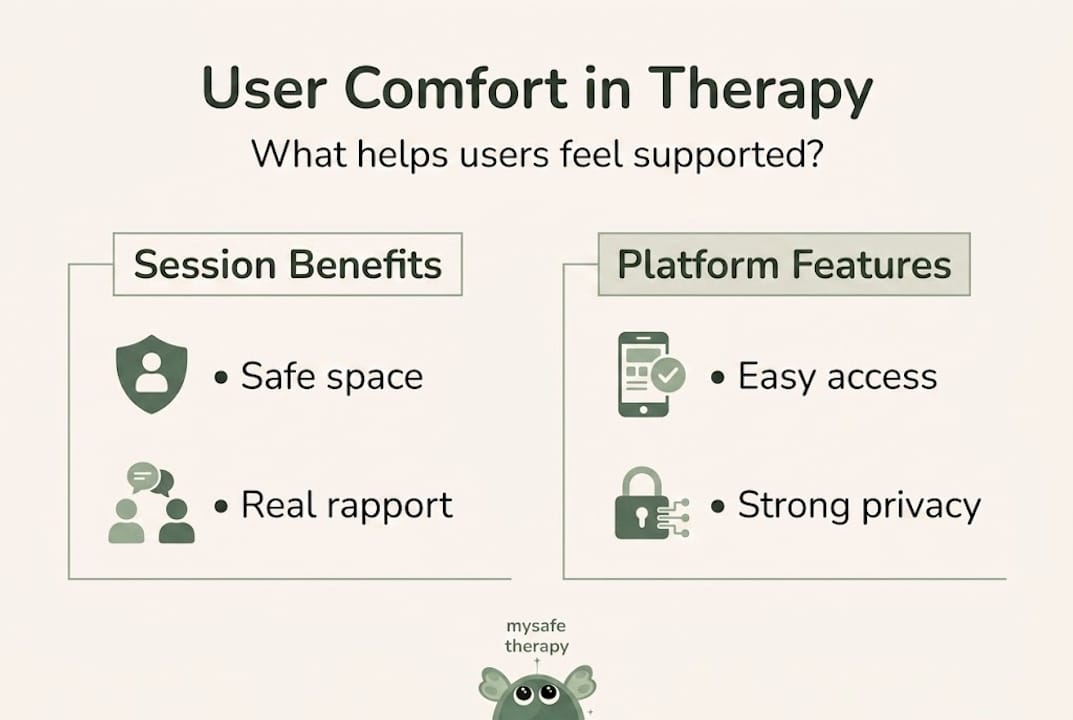
It is worth noting that comfort benefits extend across therapy types. Whether the approach is CBT for anxiety, psychodynamic work, or solution-focused therapy, the mechanism is consistent. A person who feels comfortable will engage more deeply, and deeper engagement produces better outcomes.
| Therapy format | Primary comfort benefit | Best suited for |
|---|---|---|
| Video sessions | Real-time rapport, visual cues | Those comfortable with face-to-face contact |
| Chat-based therapy | Anonymity, time to compose thoughts | Social anxiety, communication difficulties |
| Avatar-based sessions | Anonymity, reduced self-consciousness | Those who find video exposure difficult |
| Blended (digital + live) | Flexibility, continuity | Complex or long-term needs |
Nuances and limits: edge cases and best-fit guidance
Online therapy does not suit every situation equally. Acknowledging this is important. Comfort in a digital setting depends on conditions that not everyone can readily achieve. Without a private, quiet space at home, the sense of confidentiality that underpins comfort is compromised. If technology is unreliable, interruptions and connection failures create frustration that undermines the therapeutic environment.
Research confirms these limitations directly. Remote CBT can be less effective than individual in-person therapy for severe generalised anxiety disorder, partly due to weaker therapeutic rapport when sessions are conducted entirely online. For people with complex presentations, including severe depression, trauma with significant dissociation, or active risk, in-person care is often more appropriate. The physical presence of a therapist carries non-verbal cues and a quality of attunement that digital communication has not fully replicated.
It is also worth considering the digital literacy dimension. Older adults, or those unfamiliar with video platforms, may experience additional cognitive load navigating technology during sessions. This is itself a comfort barrier, and platforms that invest in simple, well-supported onboarding processes are better positioned to serve this group.
Before starting online therapy, consider the following practical points:
- Assess your environment: Can you consistently access a private, quiet space for sessions?
- Check your technology: Is your internet connection stable and your device secure?
- Evaluate severity: If symptoms are severe or risk is elevated, discuss suitability with your GP or a mental health professional before committing to digital-only care.
- Verify therapist credentials: Ensure your therapist is registered with BACP, UKCP, or NCPS and has completed CPD in online therapy competencies.
- Consider accredited therapists: Accreditation is a direct indicator of professional standards being maintained.
Pro Tip: Use a personal, non-shared device and a private network for online therapy sessions. If your home network is shared, a VPN adds an additional layer of privacy. Therapists who discuss these practical steps with you at the outset are demonstrating exactly the kind of person-centred approach that contributes to genuine comfort.
The goal is not to discourage online therapy. It is to help people make informed decisions about the format that will serve them best. For the majority of people with mild to moderate anxiety, depression, or relationship difficulties, online therapy in a comfortable, well-designed environment is a highly effective option.
What most articles miss about user comfort in online therapy
Most discussion of online therapy focuses on access. The argument runs: it is convenient, it removes geographical barriers, it fits around work schedules. These things are true, and they matter. But they describe comfort as a logistical feature rather than as a clinical mechanism.
The evidence positions comfort differently. It is not a bonus offered alongside the therapy. It is part of the mechanism through which therapy works. When comfort is absent, engagement falls. When engagement falls, outcomes deteriorate regardless of how technically sound the therapeutic model is.
There is also a design responsibility that is frequently overlooked. Platform developers, clinical teams, and therapists all contribute to the comfort environment. It is not sufficient for one element to work well in isolation. A highly skilled therapist on a poorly designed, insecure platform creates friction. A beautiful interface paired with a mismatched therapist fails the same way. Real outcomes emerge from the combination of rigorous privacy, flexible online therapy, sustained therapist development, and genuine person-centred design working together.
Organisations building digital mental health tools would do well to treat comfort not as a UX afterthought but as a core clinical variable. And individuals seeking therapy deserve to understand that the platform and therapist they choose are active ingredients in their own progress.
Explore therapy options focused on your comfort
The evidence makes a clear case: comfort is central to therapy working. MySafeTherapy is built with this principle at its foundation.
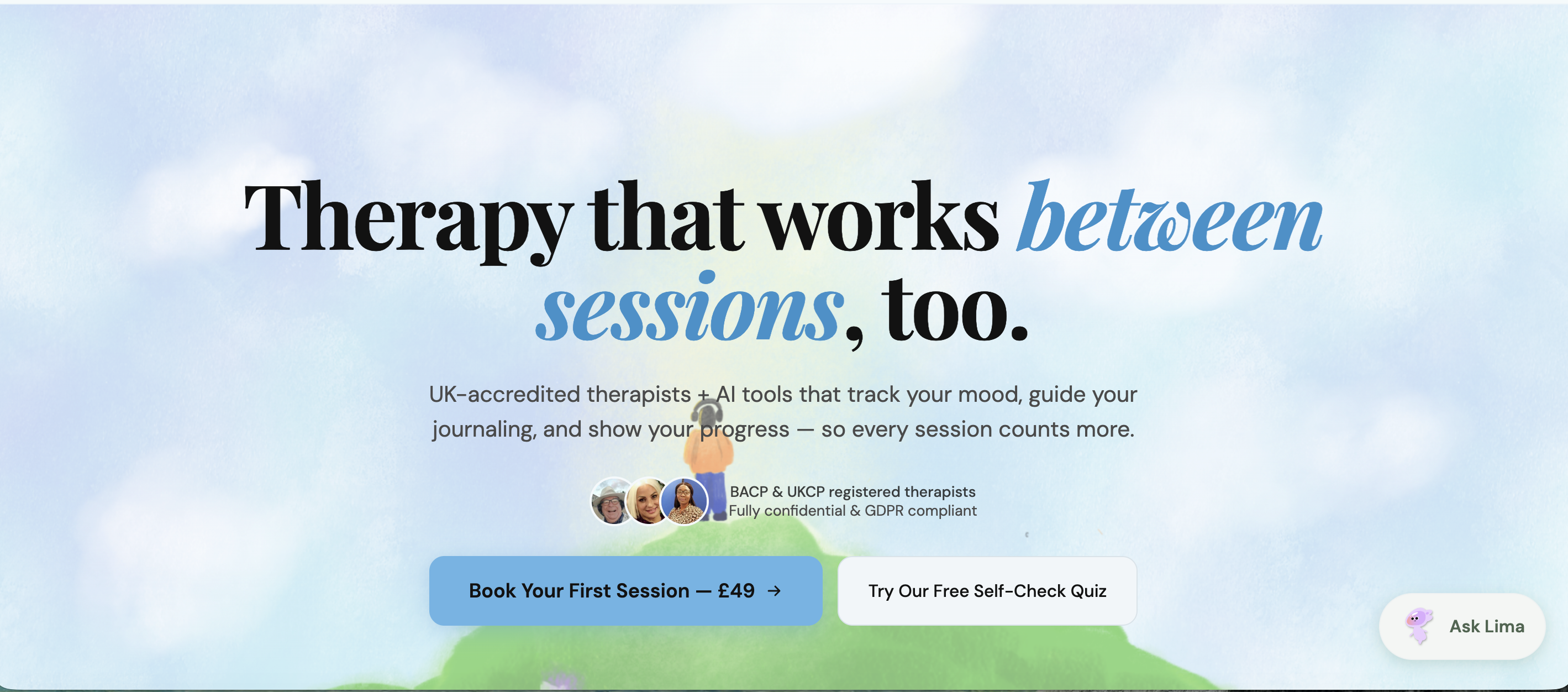
On MySafeTherapy, every therapist is accredited with BACP, UKCP, or NCPS, and sessions are available via video, chat, or avatar format to match your personal comfort level. Scheduling is flexible across evenings and weekends, with transparent pricing and easy therapist switching. Supplementary tools including AI journaling and mood tracking extend support between sessions. If you are ready to find support that is built around your needs, you can start therapy and be matched with a qualified therapist at a time and pace that suits you.
Frequently asked questions
How does user comfort affect therapy outcomes?
Higher comfort increases session attendance and module completion, which directly improves results. Research in guided iCBT shows that persistence in engaging with therapy content is a strong predictor of reduced anxiety and depression symptoms.
What makes online therapy comfortable for users?
Design features that reduce cognitive overload, strong data privacy, secure technology, and a person-centred therapist approach all contribute. Low-stimulus interfaces have been validated as creating a digital safe space, particularly for those experiencing depression or PTSD.
When is online therapy less suitable for comfort?
Online therapy is less appropriate when a person lacks private space, has unreliable technology, or presents with severe symptoms. Remote CBT has shown reduced effectiveness compared to in-person care for severe generalised anxiety disorder, largely because therapeutic rapport is harder to establish digitally.
Should therapists specialise in online therapy competencies?
Yes. Therapists delivering online care should complete CPD specifically in online therapy skills, including risk management, boundary-setting in digital contexts, and technical suitability assessment. Online therapy competencies are a distinct professional requirement, not simply an extension of face-to-face practice.